

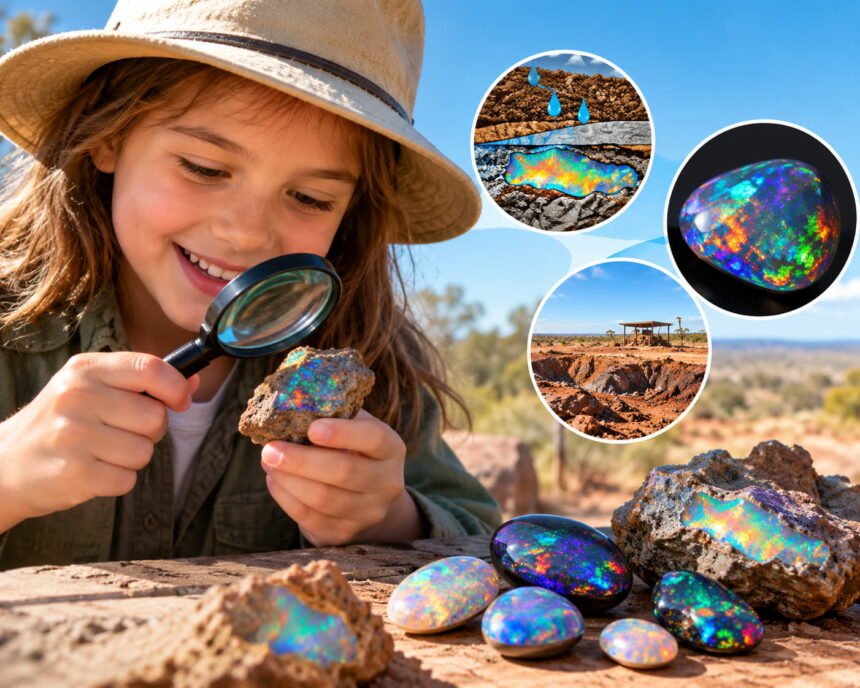
Have you ever gazed into a gemstone and felt like you were staring into another universe? What makes certain stones command prices that rival diamonds, while others barely raise an eyebrow? And why do collectors from Sydney to London obsess over gems from a tiny outback town most people have never heard of?
Welcome to the mesmerising world of Lightning Ridge black opals—arguably the most captivating gemstones on Earth. These extraordinary stones, with their dark, mysterious bodies and explosive bursts of colour, have enchanted jewellery lovers and serious collectors for over a century. Found exclusively in the remote Australian outback, they represent the pinnacle of what nature can create when conditions align perfectly.
In this guide, we’ll explore everything you need to know about buying loose black opals directly from their source. You’ll discover what makes Lightning Ridge opals genuinely unique, how to spot authentic stones from imitations, and why purchasing directly from Australian miners offers incredible value. If you’re searching for opals for sale in Lightning Ridge, you’ll also learn how to identify quality gemstones, understand their value, and choose an authentic opal that suits your preferences. Whether you’re a first-time buyer looking for something special or a seasoned collector hunting for investment-grade pieces, you’re in the right place. Let’s get started.
What Makes Lightning Ridge Black Opals So Special?
The Unique Geology Behind Lightning Ridge Opals
Lightning Ridge sits in northwestern New South Wales, where ancient geological processes created the perfect conditions for opal formation. Around 100 million years ago, this region was covered by an inland sea. As the waters receded, silica-rich solutions seeped into cracks and voids in the earth, eventually solidifying into opal.
What sets Lightning Ridge apart is its specific combination of trace elements and iron oxide. These create the distinctive dark body tone that makes black opals so striking. The region’s unique clay formations, known as opal dirt, contain pockets and seams where gem-quality black opal forms naturally.
Understanding the “Play of Colour” in Black Opals
The magic of black opal lies in its “play of colour”—those dancing, shifting hues that seem to move within the stone. This phenomenon occurs when light diffracts through tiny silica spheres arranged in precise patterns within the opal’s structure.
Against a dark body tone, these colours appear incredibly vivid. Reds and oranges are considered most valuable, followed by greens and blues. The most prized stones display multiple colours in bold, rolling patterns. Each opal is genuinely unique, with its own personality and colour signature. For gemstone enthusiasts exploring opals for sale in Lightning Ridge, these remarkable colour patterns make every black opal a distinctive and highly desirable choice.
Why Are Black Opals More Valuable Than Other Opals?
Black opals represent less than 5% of global opal production, making them exceptionally rare. Their dark background amplifies the brilliance of their colour play, creating a visual impact that lighter opals simply cannot match.
Top-quality black opals regularly fetch higher prices per carat than diamonds. Exceptional stones have sold at auction for over $10,000 per carat. This combination of rarity, beauty, and strong market demand makes them highly sought after by collectors worldwide.
Buying Loose Black Opals: What You Need to Know
What Does “Loose” Mean When Buying Opals?
When we talk about loose opals, we mean stones that haven’t been set into jewellery. They’re cut and polished, ready for whatever purpose you choose. Buying loose gives you complete flexibility—you can have a custom ring designed, create a pendant, or simply enjoy the stone as a collector’s piece.
Loose opals also allow for proper examination. You can assess the stone from every angle, check for any flaws, and truly appreciate its colour play without metalwork getting in the way.
Benefits of Purchasing Loose Opals vs Set Stones
Purchasing loose opals offers several advantages. First, you pay only for the gemstone itself, without the markup associated with designer settings. This often means better value for your budget.
Second, loose stones let you work with your preferred jeweller to create something truly personal. Rather than settling for a pre-made design, you control every aspect of the final piece. Plus, you can always add to your collection and have multiple stones set into a single creation later.
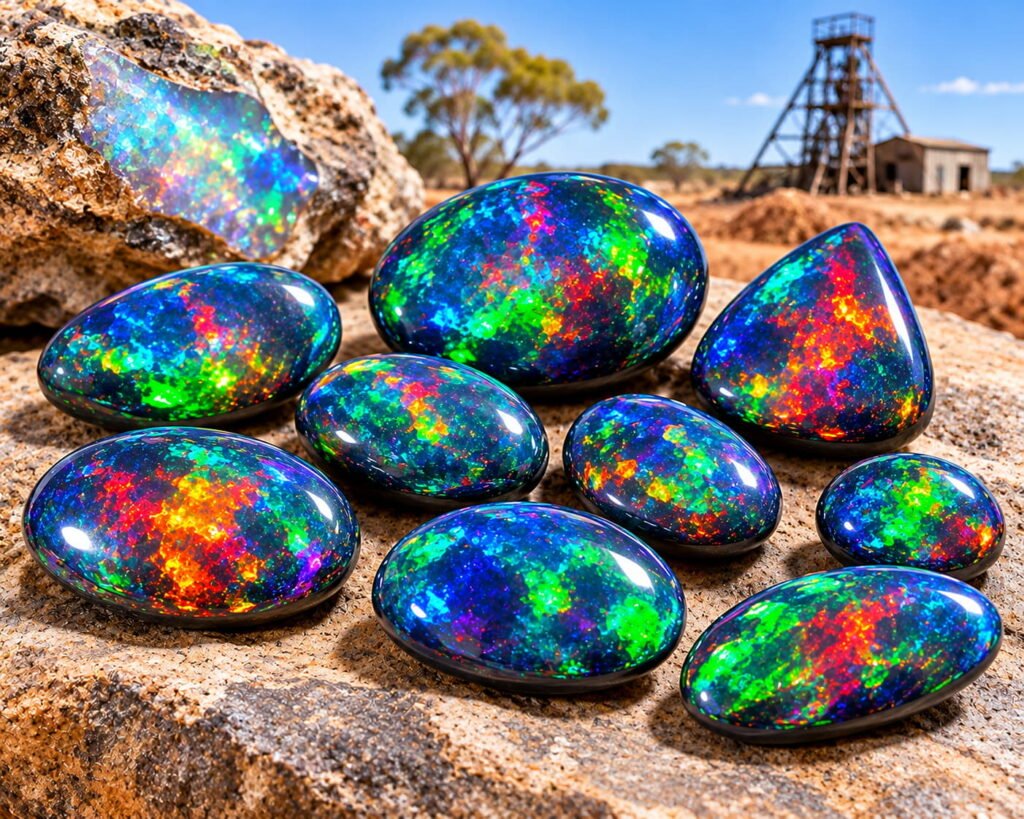
How to Choose the Right Loose Black Opal for Your Needs
Consider your intended use first. A statement ring requires a larger, more dramatic stone, while earrings might call for a matched pair of smaller opals. Think about your colour preferences too—some people adore the fiery reds, while others prefer cool blues and greens.
Budget matters, of course, but don’t focus solely on size. A smaller stone with exceptional colour and pattern often outshines a larger, less vibrant opal. Trust your instincts—the right opal will speak to you.
How to Tell If a Black Opal Is Real
Natural vs Synthetic: Spotting the Difference
Synthetic opals exist, though they’re relatively uncommon compared to natural stones. Lab-created opals often display an unnaturally regular pattern, sometimes described as “snakeskin” or “lizard skin.” Natural opals have more random, organic colour patterns.
Under magnification, synthetic opals may show columnar structures that natural stones lack. If a price seems too good to be true for a supposedly high-quality black opal, approach with caution.
Understanding Solid Opals, Doublets, and Triplets
A solid opal is exactly what it sounds like—natural opal all the way through. Doublets consist of a thin slice of natural opal cemented to a dark backing material. Triplets add a clear protective dome on top.
Doublets and triplets aren’t fake—they contain real opal—but they’re worth significantly less than solid stones. Reputable sellers always disclose whether a stone is solid, doublet, or triplet. When examining stones, look at the side profile: solid opals appear consistent throughout.
Certification and Authenticity Guarantees
Reputable dealers provide certificates of authenticity with their opals. These documents confirm the stone’s natural origin, body tone, and key characteristics. Some dealers offer independent laboratory certification for higher-value pieces.
Always ask about return policies and guarantees before purchasing. Trustworthy sellers stand behind their stones and welcome questions about authenticity.
What to Look for When Buying Black Opals Online
Evaluating Colour, Brightness, and Pattern
When shopping online, quality images and videos are essential. Look for footage showing the opal in natural daylight and under artificial lighting. The stone should display vibrant, consistent colour play.
Brightness refers to how vividly the colours shine. A bright opal’s colours practically leap from the stone, while duller specimens appear muted. Pattern variety adds interest—look for rolling flash, harlequin, or pinfire patterns depending on your preference.
Understanding Opal Grading Systems
While no universal grading standard exists for opals, most reputable dealers use consistent criteria. Body tone ranges from N1 (darkest black) to N9 (lightest). Brightness scales typically run from B1 (most brilliant) to B7 (dull).
Understanding these scales helps you compare stones across different sellers. Don’t hesitate to ask dealers to explain their specific grading approach.
How Much Should You Pay for a Quality Black Opal?
Prices vary enormously based on quality. Entry-level black opals might start around $100 per carat, while museum-quality specimens can exceed $20,000 per carat. Mid-range stones with good colour and brightness typically fall between $500 and $3,000 per carat.
Set a realistic budget and focus on finding the best quality within your range. Remember, a well-chosen smaller stone often brings more joy than a larger, compromised specimen.
Traceability and Ethical Sourcing
Direct purchasing provides complete transparency about your stone’s origin. You know exactly where your opal came from and who mined it. This traceability offers peace of mind that simply isn’t possible with stones that have passed through multiple hands.
Caring for Your Loose Black Opal
Storage and Handling Best Practices
Store loose opals individually in soft pouches or lined boxes. Avoid extreme temperature changes, which can stress the stone. Keep opals away from harsh chemicals and cosmetics.
Handle your opal carefully—while reasonably durable, opals can chip if dropped onto hard surfaces. When cleaning, use only lukewarm water and a soft cloth.
Can Black Opals Get Wet?
Solid black opals can handle occasional moisture without issue. However, prolonged soaking isn’t recommended. Doublets and triplets should never be immersed, as water can penetrate the glue layers and damage the stone.
Finding Your Perfect Lightning Ridge Black Opal
We’ve covered a lot of ground, from understanding what makes Lightning Ridge black opals extraordinary to knowing exactly what to look for when making your purchase. These remarkable gemstones offer something truly special—a piece of Australian natural history combined with unmatched beauty.
Buying direct from Lightning Ridge isn’t just about getting better value, though that’s certainly a benefit. It’s about connecting with the source, supporting genuine Australian mining families, and knowing exactly where your precious stone originated.
Whether you’re drawn to dramatic reds, electric blues, or mysterious greens, there’s a Lightning Ridge black opal waiting for you. Take your time, trust your instincts, and don’t settle until you find a stone that genuinely speaks to you. After all, a truly exceptional opal isn’t just a purchase—it’s the beginning of a lifelong love affair with nature’s most spectacular gemstone.