

You want a warm house in winter without fuss, and gas ducted heating delivers that speed and coverage most modern systems promise. From the first sizing calculation to the final thermostat settings, each choice nudges performance and your long‑term bill. So, how do you know which unit fits your climate zone? The rule of thumb is to match BTU output to square footage, but local weather quirks can shift the numbers. And you’ll spot a qualified installer by checking licences, asking for references, and watching how they handle the duct layout. We also recommend a quick monthly filter check, a yearly professional service. And syncing the thermostat with your smart‑home hub to snag government rebates that can shave off the upfront cost.
How Gas Ducted Heating Works
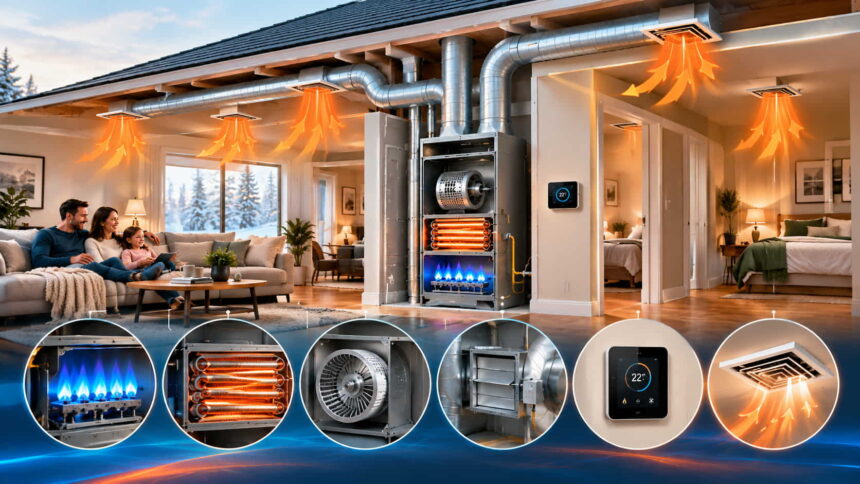
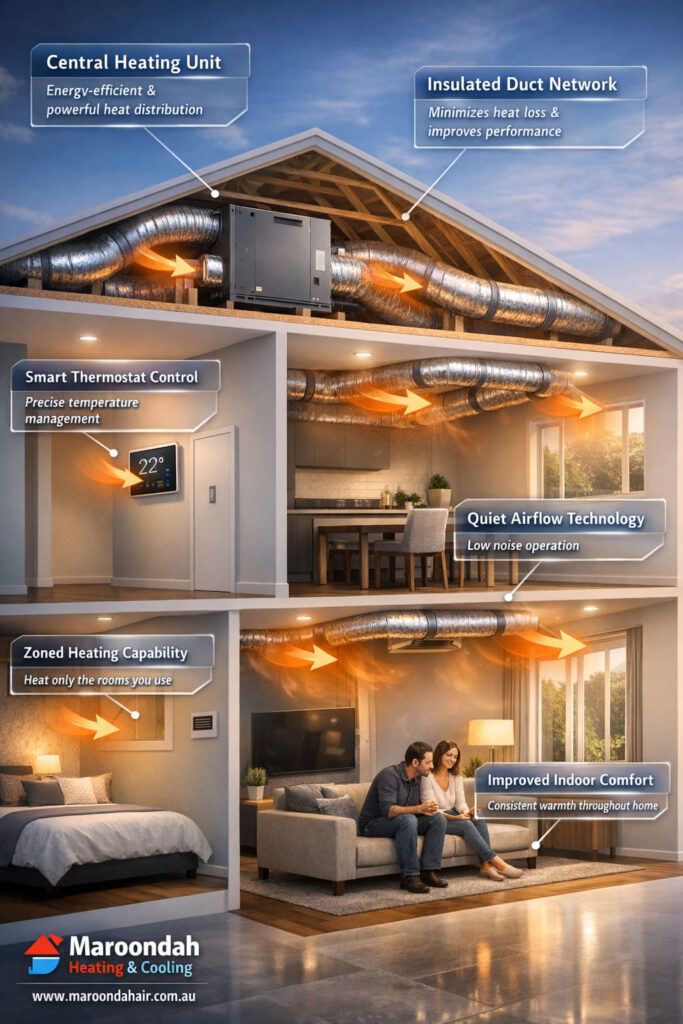
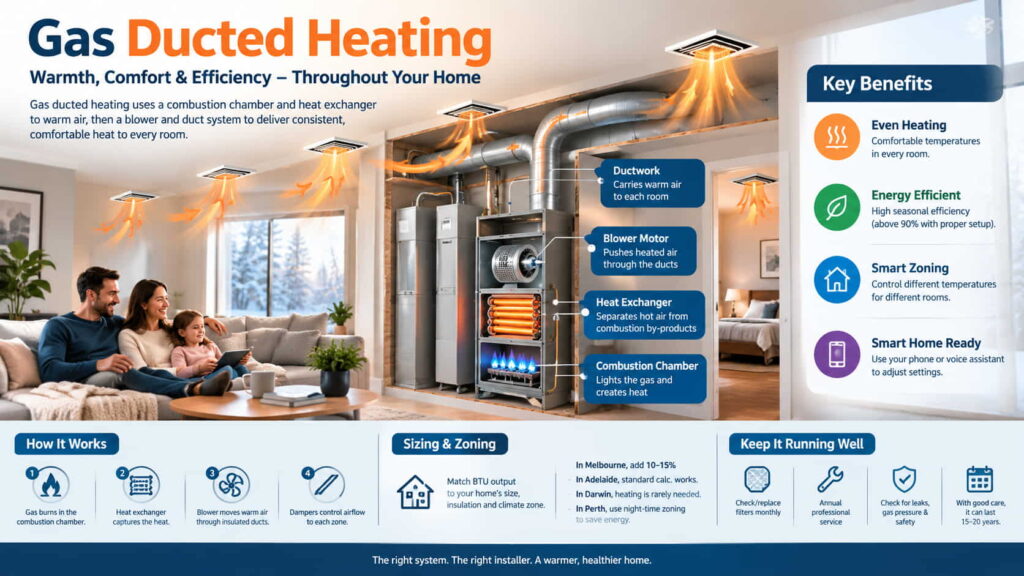
Ever wonder how a gas ducted heating system actually gets warm air into every room? Inside the furnace a combustion chamber lights the gas and a heat exchanger pulls the heat out without letting any fumes slip into your living space. It runs quietly all day long. So a blower motor pushes that heated air through insulated ducts, while smart dampers, controlled by a thermostat or even a phone app, decide which zones get what temperature. And you can set different rooms to different temps, so the whole house stays comfy without wasting energy.
- Combustion chamber, where the gas flame creates heat.
- Heat exchanger, separates hot air from combustion by‑products.
- Blower motor, circulates air through the ductwork.
- Zone dampers, regulate airflow to individual rooms.
Sizing and Zoning for Australian Climates
Want a gas ducted heating system that actually works? You’ll need to work out the kilowatts or BTUs each room demands, factoring in floor area, ceiling height, how tight the insulation is and whether you’re in a cool southern suburb of Melbourne or the milder coastal strip of Brisbane. Roughly 100 W per square metre for good insulation. If you’re in an older home with single glazing or lofty ceilings, bump that figure up a bit, then let the installer map out zones, putting separate thermostats in the family room, bedrooms and any other high‑usage spots so the heat goes where you need it, not into empty space.
- Melbourne’s cool temperate climate means you should add roughly 10‑15 % to the calculated load.
- In Adelaide’s moderate climate the standard calculation works fine.
- Darwin’s tropical weather hardly ever needs heating, though a tiny unit can keep you comfortable on the occasional cool night.
- Perth’s Mediterranean feel makes night‑time zoning a smart way to save energy.
Energy Efficiency and Smart‑Home Integration
Ever wonder why a gas ducted heating system can run so cheap? It pulls waste heat straight from the flue and pairs it with a variable‑speed blower that only pushes as much air as the thermostat asks. So seasonal efficiencies can top 90 % once the installer fine‑tunes it. And a Wi‑Fi thermostat lets you set schedules from your phone or tell Alexa or Google Home a new temperature without getting up. But the real saver is smart zoning. Dampers close rooms you aren’t using, cutting gas use by up to 20 % when the house is half‑empty.
- Variable‑speed blower that tailors airflow to real‑time demand.
- Wi‑Fi thermostat for smartphone‑based remote control.
- Smart zoning automatically closes dampers where rooms sit empty.
- Voice‑assistant support gives hands‑free temperature tweaks.
Selecting a Qualified Installer and What to Expect
If you pick the wrong installer, you’ll end up with heat loss, cold spots and a blower that quits early. Ask for references from recent jobs. A good contractor will have a current gas‑fitting licence, belong to the Master Builders Association. And be able to point you to a St Kilda or Fortitude Valley install they just finished. Do you want a site survey that actually checks for leaks, gas pressure and zoning before any pipe is cut? We’ve seen installers skip the duct‑leak test and later regret it, so make sure it’s on the checklist.
- Look up the licence on the NSW Fair Trading portal.
- Ask for a breakdown that lists equipment, labour and testing separately.
- Make sure they’ll provide a post‑installation service contract.
- Make sure they follow the gas installation code.
Maintenance, Warranty, and Long‑Term Performance
Ever wonder why your gas ducted heating system seems to lose punch? Regular upkeep is the only real way to keep it humming at peak efficiency and stretch its life, which usually hits 15‑20 years if you stick to an annual service schedule. First thing: swap or clean the air filter, then give the heat exchanger a good look‑over for cracks that could let carbon monoxide slip into the house. A qualified tech will also test the gas pressure, grease the blower motor bearings. And make sure the zone dampers seal tight, so you get steady warmth and lower fuel bills. Got any doubts? Ask your installer for a quick checklist each year.
- Change the filter every 3‑6 months, depending on how hard you run the system.
- Inspect the heat exchanger once a year to catch cracks early.
- Lubricate the blower motor as part of the yearly service.
- Check zone‑damper seals so no air sneaks around.
Safety Regulations and Carbon Monoxide Protection
Safety comes first when you hook up any gas‑fired kit. Did you know Aussie law forces a carbon‑monoxide alarm right next to the furnace and in every bedroom that borders the heating zone? Test it every month without fail. You need a battery‑powered detector that screams at 30 ppm within half an hour, and you’ve got to give it a quick check each time you service the system. And the exhaust flue must run outdoors, rising at least 150 mm per metre, plus you should do a soap‑solution test on every gas line and keep the shut‑off valve handy.
- Put a carbon‑monoxide detector in every main living space.
- Size the flue correctly to secure safe venting.
- Check for leaks with a soap‑solution test on all gas joints.
- Fit an emergency shut‑off valve within easy reach of the furnace.
Environmental Impact and Government Incentives
Natural gas still spews CO₂, though, in city homes. Because it burns cleaner than coal, many Australian states now offer rebates for gas heating units that meet Rating label standards, encouraging greener homes and letting governments track emissions drops. And does Victoria’s Energy Upgrade scheme sound tempting, with a 10 % rebate on furnaces that post a SEER above 90 % and cut winter bills for many families across the state? Queensland’s Home Energy Loan Scheme can hook you up with financing for installs, and a hybrid that blends gas ducted heating with a pre‑heater can slash gas use on evenings. So, ready to cut your bill while helping the planet, reducing reliance on fossil fuels, and significantly future‑proofing your home for the inevitable shift to renewables and lower carbon footprints?
- Victorian Energy Upgrade, rebate for high‑efficiency units.
- Queensland Home Energy Loan, low‑interest financing options.
- Solar‑helped pre‑heater, reduces gas consumption.
- Hybrid gas‑electric models, future‑proofing for renewable transition.
Choosing the Right Control Strategy
Control strategy can make or break comfort, especially in big Aussie homes where temperature gradients show up. A single central thermostat often overheats one wing while another stays chilly. So, a multi‑zone control panel with its own room thermostats lets you fine‑tune each space, and many makers now ship furnaces with programmable schedules that learn from motion‑sensor detected occupancy. Ever wonder how much gas you’re wasting when only a few rooms are in use? The payoff is a steadier temperature spread and a clear drop in gas usage.
- Multi‑zone control panel, independent room temperature settings.
- Programmable schedules, match heating to daily routines.
- Motion‑sensor integration, automatically adjusts zones when rooms are vacant.
- Temperature drift monitoring, alerts you to imbalance issues.
Indoor Air Quality Considerations
Because the heated air runs through a sealed duct network, any leaks or dirty filters can spoil indoor air quality. So you’ll want high‑efficiency particulate air (HEPA) filters and regular duct clean‑ups, especially if you’ve pets or recent renovation dust. A tightly sealed system also blocks outdoor pollutants from getting into the conditioned space, which matters a lot in high‑traffic suburbs where dust and pollen run high. And if you pair the furnace with a dedicated ventilation unit that pulls in fresh outside air, you’ll boost air quality without killing heating efficiency. Does that sound like a plan for a healthier home?
- HEPA filter, captures allergens and fine dust particles.
- Duct cleaning, recommended every 3‑5 years.
- Dedicated ventilation, balanced fresh air intake.
- Sealant tape, prevents duct leakage and improves efficiency.
Noise Levels and Acoustic Solutions
Modern gas ducted heating units run quietly, yet older models often hum or rattle through the ducts, especially under thin ceilings or in open‑plan homes. Want a quieter home? Pick a furnace with a sound‑rated blower, usually 55 dB or less, and wrap the duct runs in acoustic insulation to cut the noise dramatically. And in bustling spots like the Gold Coast, where open‑plan living’s the norm, folks add acoustic louvres and vibration isolators to keep things virtually silent.
- Low‑noise blower, rated 55 dB or less.
- Acoustic insulation, line ducts to dampen sound.
- Vibration isolators, prevent rattling at the furnace base.
- Sound‑rated louvres, reduce airflow noise in open spaces.
Long‑Term Warranty and Service Contracts
When you’re picking a gas ducted heating system, the warranty can be just as important as the specs. A solid warranty usually protects the furnace core, heat exchanger and blower motor for at least ten years, but labor often caps at five years under a service contract. And you should skim the fine print to make sure the coverage follows you if you ever sell the house. So, in places like Hobart where energy‑efficient homes fetch higher prices, a transferable warranty can be a real selling point. Does that sound worth checking?
- Core component warranty, ten years on furnace and heat exchanger.
- Labor coverage, five years with a service agreement.
- Transferable warranty, adds value for future homeowners.
- Extended service contracts, optional for peace of mind.
Conclusion
Pick the right gas ducted heating system for your Aussie home by getting how the furnace and ductwork spread warmth, sizing it for your local climate, and choosing a qualified installer who follows the newest safety rules. And regular upkeep, plus smart‑home links, will keep the unit running efficiently for years. Do you know that government rebates and hybrid options can cut the environmental footprint while still delivering cozy heat? Follow these tips and you’ll stay warm all winter without sacrificing safety or energy efficiency.