

Say it’s 7 a.m. on a hot Saturday in January. A neighbour’s sprinkler is running over a lawn that’s already gone the colour of toast, and half the spray is landing on the footpath. Legal? Probably. Smart? Not really. A good gardener would wince, because most of that water never touches a root.
Sustainable gardening sounds like a big, worthy idea, but it boils down to a handful of habits. Cover the soil. Pick plants that suit your climate. Stop wasting water. Then feed the ground instead of the bin, because a garden built this way starts looking after itself far more than you’d expect, even for a first-time gardener.
Below are those habits one at a time, with examples you can try this month. Victoria’s water rules are the worked example because they’re well documented, but if you live somewhere else, check your own state’s rules before you change how you water.
What Does Sustainable Gardening Actually Mean?
It means a garden that asks less of you and less of the planet, so you’ll see less tap water, fewer chemicals and less waste leaving the property. You’ll also get more soil life, more birds and insects, and more shade on a hot afternoon.
Honestly, the label gets stretched. A garden full of thirsty plants on a timer isn’t sustainable just because there’s a compost bin in the corner, and any experienced gardener will tell you the real test is whether the garden keeps going on little input or needs rescuing every summer.
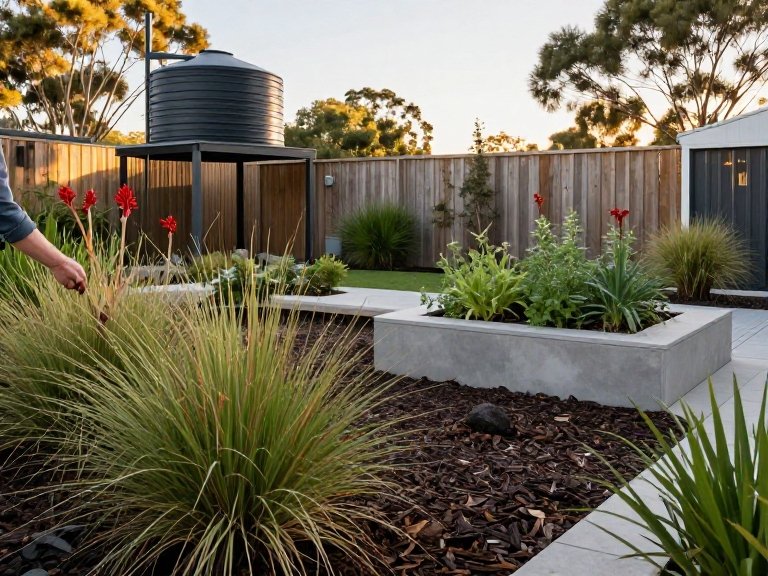
Picture two courtyards of the same size. One has bare soil and a sprinkler, while the other has bark mulch, tough native plants and a slow drip line. By February, only one of them needs saving.
Start with water, because it’s the cost you can see on the bill and the one you can change fastest.
How Do You Save Water in an Australian Garden?
Mulch First, Everything Else Second
Mulch does several jobs at once. According to Yarra Valley Water, it cuts evaporation, steadies soil temperature and holds weeds back, which is a lot of work from a few bags of bark.
How thick should it go? Woollahra Council in New South Wales suggests a layer of 7 to 10 centimetres around your plants. Do the maths on a 20-square-metre front bed and you’re looking at roughly 1.4 to 2 cubic metres, so order a bulk load instead of hauling bags home all weekend.
There’s one catch, though. Organic mulch can pull nitrogen out of the soil as it breaks down, so watch for yellowing lower leaves and feed the plants if you spot them, as Queensland Government advice points out.
My blunt opinion? If you only do one thing this weekend, mulch. Fancy irrigation can wait until the soil’s covered.
Water the Roots, and Know the Rules
Water belongs at the roots, not on the leaves, where more of it evaporates. Before you turn anything on, poke a finger into the soil or use a moisture meter, as Yarra Valley Water recommends, and if it’s still damp, leave it alone.
Victoria’s permanent water saving rules run all year. Hoses must be leak-free with a trigger nozzle, and any watering system, even a basic sprinkler on a tap, can only run between 6 pm and 10 am. A hand-held hose with a trigger nozzle, a bucket or a watering can is fine at any time. Fines can apply if you break the rules, and the state reviewed them in December 2025, so read the current wording on the Victorian Government’s permanent water saving rules page.
Also, swap the hose for a broom on paths and patios, because it’s one of the easiest wins going.
Rainwater, Greywater and Wicking Beds
South East Water notes that the permanent rules don’t apply when you’re using rain, recycled or grey water. That’s one reason tanks are popular. Melbourne Water suggests a rainwater tank or even a small grab-and-go system for garden use, and it’s smart to check what your council and water authority allow before you plumb anything in.
Wicking beds deserve a look too. They draw water up from a reservoir below, so plants get steady moisture with very little lost on the way, as Yarra Valley Water explains, and that suits vegies, herbs and anyone who forgets to water.
Which Plants Suit a Low-Water, Low-Effort Garden?
Go Native, but Go Local
Native and climate-resilient plants cope with heat on very little water once they’re established, and they bring in native birds and insects. Good deal. Still, native doesn’t automatically mean local. A plant that loves one region can struggle in another, so ask a nearby indigenous nursery or a local gardener what suits your suburb.
Here’s a twist for people who love feeding everything. Most local native plants prefer low-fertility soil, so Darebin Council recommends bark mulch on its own, without soil improvement, and too much fertiliser can also wash into creeks and feed blue-green algae. Skip the rose food.
Group Plants by Thirst
Woollahra Council recommends putting plants with similar water needs together, so none of them get too much, and it’s sensible advice because your tomatoes and your lomandras shouldn’t share a watering schedule.
Say you’re redoing a sunny side bed. If you put the vegies near the tap and the natives out the back, you’ll walk less and waste less.
Rethink the Lawn
A lawn isn’t the enemy. A big, thirsty one is. Darebin Council points to tough options such as ‘Sir Walter’ buffalo, the native grass Microlaena stipoides, or a native groundcover like Myoporum parvifolium for front gardens. Whatever you pick, a steady lawn mowing routine keeps the grass at a sensible height without stressing it.
How Can You Build Healthy Soil Without Buying Bags of Stuff?
Compost. That’s the short answer, and a gardener with a good heap rarely needs to buy soil conditioner.
Composting turns food scraps and garden waste into dark, nutrient-rich material that plants love, and it keeps organic waste out of landfill, which helps with climate impact. A bin or worm farm tucked into the corner of a small yard is plenty to get started.
No room? Victorian councils are rolling out food and garden organics (FOGO) bins, and by 2030 every Victorian is meant to be able to recycle scraps at home or at a drop-off point. In an average year, over 667,000 tonnes of scraps come out of household organics bins across the state, enough to fill the MCG twice.
A FOGO bin also pairs well with a home bin. It can take the awkward stuff such as citrus, onions, meat, bones and weeds, as Melton City Council points out. Smelly bin? Layer garden clippings between food scraps, or freeze the stinky bits until collection day.
Keep harsh chemicals out of the mix where you can, because Darebin Council warns that strong products can kill native insects, plants and animals. Try the gentler fix first.
What If You’ve Got a Small Courtyard or You Rent?
Small spaces are good news. Less area means less mulch, less water and fewer weekends lost to the yard, and Hobsons Bay Council’s My Smart Garden guide suggests rental-friendly options such as wicking pots and removable shade, which you can pack up when the lease ends.
Picture a 3-by-2-metre paved courtyard. Four large wicking pots, a couple of native grasses, a layer of mulch on top and a small shade sail add up to a garden that forgives a missed weekend.
Planning to dig for anything bigger? Check for underground services first through Before You Dig Australia, because a cut cable ruins far more than a Saturday.
When Is It Worth Hiring a Gardener?
DIY works until it doesn’t. Maybe there’s a big tree to remove, a sloping block that fights every shovel, or irrigation nobody ever set up properly. Or you just haven’t got a free weekend until Easter. In cases like those, a good gardener earns their fee.
Ask any gardener you’re considering how they handle mulch, watering and green waste before you agree to anything. If the answer is “we blow the leaves and bag them”, keep looking, because a decent gardener will also know your council’s food and garden organics rules.
Bigger changes, like new beds, paths or a full replant, are different again, and a proper garden design done up front saves you ripping plants out in a year’s time.
Common Sustainable Gardening Mistakes (and Quick Fixes)
Small slips cost water, money and plants, so these five are worth fixing first:
- Hosing down paths. Sweep instead.
- Running the watering system on a timer whatever the weather. Check the soil with a finger or a moisture meter before it switches on.
- Treating natives like roses. Most local natives prefer low-fertility soil, so skip the fertiliser.
- Laying mulch thin. Aim for 7 to 10 centimetres.
- Planting thirsty and tough plants in the same bed, then watering for the thirstiest. Group them by water need.
FAQs
What are the garden watering rules in Victoria?
Hoses need to be leak-free and fitted with a trigger nozzle. Sprinklers and other watering systems can only run between 6 pm and 10 am. A hand-held hose with a trigger nozzle, a bucket or a watering can is fine at any time. Rules can be updated, so check with your water authority.
Are native plants really low maintenance?
Mostly, once they’re established. Native and climate-resilient plants cope with heat on very little water, and because they prefer low-fertility soil, you’ll fertilise far less. They aren’t zero effort, though, since new plants need more attention while they settle in and you’ll still want to mulch and weed. Pick species that suit your local area and the workload stays light, and a gardener can keep it that way if you’d rather not.
Can I put meat and citrus in my compost?
They’re awkward in a home bin. That’s where a kerbside FOGO bin comes in handy.
The Bottom Line
Cover the soil. Choose plants that suit where you live. Water at the roots, and only when the soil needs it, then feed the ground with compost instead of bagged fertiliser. None of that needs a big budget, only a few changed habits.
Start with mulch this weekend and add one new habit a month. And if the job’s bigger than the time you’ve got, talk to a gardener in Frankston about a plan that fits your yard and the rules where you live.