

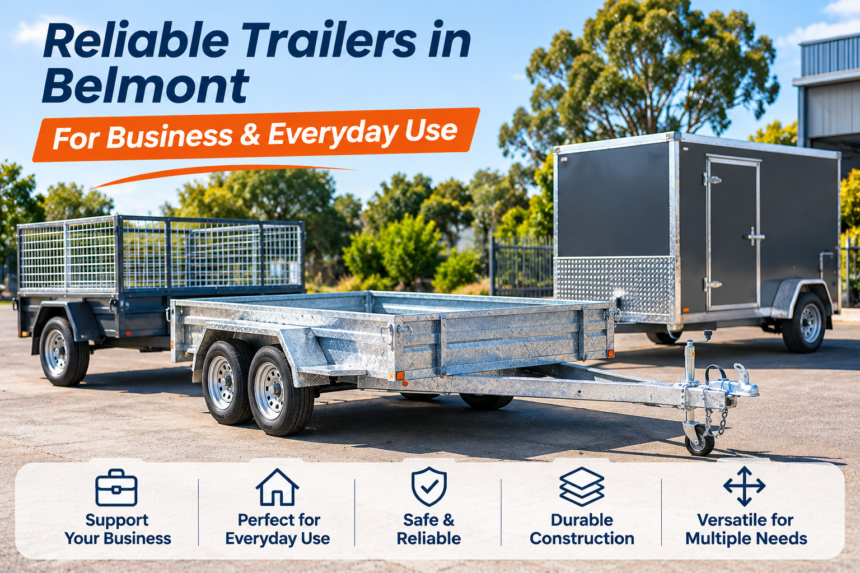
Trailers play an important role in making transportation easier for businesses, tradespeople, and homeowners. Whether you need to move construction materials, transport machinery, carry landscaping equipment, or handle household projects, having a reliable trailer can save time and effort.
In Belmont, trailers are useful for a wide range of transportation requirements. Local businesses depend on them to move tools, products, and equipment between job sites, while individuals use them for moving furniture, gardening, camping, and other everyday activities.
However, choosing the right trailer is about more than finding something with enough space. Durability, load capacity, safety, construction quality, and ease of use all contribute to a trailer’s overall performance.
Investing in a dependable trailer can make everyday transportation more convenient while helping businesses operate efficiently. Let’s explore why reliable trailers are essential and what you should consider before purchasing one.
1. Make Business Transportation More Efficient
For businesses that regularly transport equipment and materials, having a reliable trailer can significantly improve daily operations.
Construction companies, electricians, plumbers, landscapers, and maintenance professionals often need to carry tools and supplies between different locations. Depending on delivery services or making multiple trips in a regular vehicle can consume valuable time.
A suitable trailer provides additional carrying capacity, allowing businesses to transport more equipment in one journey.
For example, a landscaping company can use a trailer to carry lawnmowers, gardening tools, plants, and green waste. Similarly, construction professionals can transport building materials, machinery, and other essential equipment.
This flexibility helps businesses organise their transportation requirements and focus more on completing customer projects.
Choosing quality trailers Belmont businesses can rely on is a practical way to improve transportation efficiency and support everyday operations.
2. Improve Safety When Carrying Heavy Loads
Safety is one of the most important considerations when transporting goods and equipment. A poorly constructed or unsuitable trailer can create problems, particularly when carrying heavy loads over long distances.
A reliable trailer is designed with appropriate structural strength, suspension components, tyres, and braking systems to support its intended application.
These features help maintain stability while travelling and reduce the risk of transportation-related problems.
Before purchasing a trailer, consider the following safety features:
- Strong chassis: Provides structural support and helps handle the intended load.
- Reliable braking system: Helps maintain control when slowing down or stopping.
- Quality tyres: Ensure suitable load ratings and road performance.
- Secure coupling: Keeps the trailer properly connected to the towing vehicle.
- Safety chains: Provide an additional connection if the coupling becomes disconnected.
- Proper lighting: Ensures indicators, brake lights, and tail lights function correctly.
It is also important to understand the trailer’s Aggregate Trailer Mass (ATM) and Gross Trailer Mass (GTM), along with your towing vehicle’s limits.
Never exceed the manufacturer’s specified load capacity. Correct loading and weight distribution are equally important for safe transportation.
3. Support Different Transportation Requirements
One of the biggest advantages of owning a trailer is its versatility. Different trailer designs are available for different transportation needs, making it easier to find an option that suits your personal or commercial requirements.
Some popular trailer types include:
- Box Trailers: These are suitable for general transportation, household projects, furniture, and everyday materials.
- Caged Trailers: Their additional side structure makes them useful for transporting garden waste, branches, soil, and bulky materials.
- Car Trailers: Designed to transport vehicles safely, making them useful for vehicle dealers, mechanics, and car enthusiasts.
- Plant Trailers: Commonly used for moving construction machinery, generators, and other heavy equipment.
- Enclosed Trailers: Provide additional protection for valuable tools, products, and equipment against weather and road debris.
- Flatbed Trailers: Offer an open platform for carrying larger items and materials that may not fit inside conventional trailers.
Before selecting from the available trailers Belmont options, consider what you transport most frequently. Choosing the right design can improve convenience and reduce unnecessary transportation difficulties.
4. Save Money on Regular Transportation
Transportation expenses can become a significant operating cost for businesses that frequently move equipment, products, and materials.
Relying on external delivery services for every transportation requirement may increase expenses over time. Owning a suitable trailer can provide greater control over when and how goods are transported.
For example, a small business may need to collect supplies from different suppliers throughout the week. Having its own trailer allows the business to organise these trips according to its schedule.
Homeowners can also benefit financially. Instead of hiring a vehicle whenever they need to move furniture, collect building materials, or transport garden waste, they can use their own trailer when required.
Of course, trailer ownership involves initial purchasing costs, registration, maintenance, and storage. However, for people who regularly need additional carrying capacity, the long-term convenience can make it a worthwhile investment.
5. Enjoy Greater Convenience for Everyday Activities
Trailers are not limited to commercial applications. They can also make many household and recreational activities easier.
Moving a house, purchasing large furniture, completing garden renovations, or transporting outdoor equipment often requires more space than a standard passenger vehicle can provide.
A reliable trailer offers additional carrying capacity and allows you to transport bulky items without overcrowding your car.
Trailers are also useful for recreational activities such as:
- Carrying camping equipment for weekend trips.
- Transporting bicycles and outdoor gear.
- Moving gardening tools and landscaping supplies.
- Collecting furniture and home improvement materials.
- Carrying equipment for fishing and other outdoor activities.
For families and individuals who enjoy travelling and outdoor adventures, having a suitable trailer can provide greater flexibility.
A compact box trailer may be sufficient for occasional household use, while people with larger transportation requirements may benefit from a specialised model.
6. Reduce Maintenance Problems with Quality Construction
A trailer is regularly exposed to road vibration, changing weather conditions, dust, moisture, and heavy loads. Over time, these factors can affect its frame, tyres, suspension, and other components.
This is why construction quality should be an important consideration when purchasing a trailer.
Look for strong materials, quality welding, durable flooring, and corrosion-resistant finishes. Galvanised steel is commonly used in trailer manufacturing because it provides protection against corrosion.
Aluminium is another option for certain trailer designs due to its relatively low weight and natural corrosion resistance.
However, the material alone does not determine quality. The overall engineering, manufacturing standards, and suitability for the intended load are equally important.
Regular maintenance is also necessary. Owners should inspect tyres, brakes, wheel bearings, suspension, lights, and coupling connections.
Choosing well-built trailers Belmont buyers can depend on may help reduce avoidable maintenance issues and provide better long-term performance when combined with proper care.
7. Improve Productivity for Tradespeople and Contractors
For tradespeople, time is directly connected to productivity. Delays caused by missing equipment, transportation problems, or multiple trips between locations can affect the entire work schedule.
A suitable trailer allows contractors to organise their tools and materials more effectively.
For example, plumbers can transport pipes, fittings, and equipment, while electricians can carry cable drums, ladders, and tool storage systems.
Landscaping professionals can use trailers to move mowers, blowers, gardening equipment, and green waste.
Having a dedicated transportation solution also makes it easier to keep equipment organised and accessible.
Some useful features to consider include:
- Removable side panels for easier loading.
- Loading ramps for machinery and equipment.
- Secure tie-down points.
- Lockable storage arrangements.
- Suitable trailer dimensions for regular loads.
These practical features can make everyday work more organised and help businesses manage their transportation needs efficiently.
8. Protect Valuable Goods and Equipment
Transporting expensive tools, machinery, or products without proper protection can increase the risk of damage.
A suitable trailer helps secure items during transportation and provides better support for different types of cargo.
For instance, enclosed trailers offer additional protection against rain, dust, and road debris. Caged trailers are useful for containing loose materials, while flatbed trailers provide flexibility for larger equipment.
Tie-down points, straps, loading arrangements, and suitable flooring also contribute to cargo security.
When selecting a trailer, think about the type of goods you transport and whether additional protection or security features would be beneficial.
Protecting valuable equipment is particularly important for businesses because damaged tools and materials can create unexpected replacement expenses and project delays.
9. What to Consider Before Buying a Trailer in Belmont
Before purchasing a trailer, take time to compare different models and understand their specifications.
The cheapest option may not always provide the best value, especially if it lacks the features needed for your transportation requirements.
Here are some important factors to consider:
- Purpose: Decide whether the trailer will be used for business, household activities, machinery, vehicles, or recreational transportation.
- Load Capacity: Check the ATM, GTM, tare mass, and your vehicle’s towing capacity.
- Size and Design: Choose dimensions that comfortably accommodate your regular loads.
- Construction Quality: Examine the chassis, welding, flooring, suspension, and corrosion protection.
- Safety Features: Check the brakes, tyres, lighting, coupling, and safety chains.
- Warranty and Support: Ask about warranty coverage, replacement parts, and after-sales assistance.
You should also confirm that the trailer meets applicable Western Australian registration and roadworthiness requirements.
Taking these factors into account will help you choose a trailer that provides dependable performance and suits your long-term needs.
Final Thoughts
Reliable trailers are valuable for businesses and individuals who regularly need additional transportation capacity. From improving business productivity and reducing transportation expenses to making household projects and recreational activities easier, the benefits extend across many different applications.
The key is to choose a trailer that matches your requirements, towing vehicle, and budget. Paying attention to construction quality, load capacity, safety features, and maintenance requirements can help you make a better purchasing decision.
Whether you are a contractor, business owner, tradesperson, or homeowner, investing in quality equipment can make everyday transportation considerably easier.
If you are exploring trailers belmont, compare different trailer designs and specifications before making your final decision. A well-chosen trailer can become a dependable long-term asset for both personal and commercial use.