

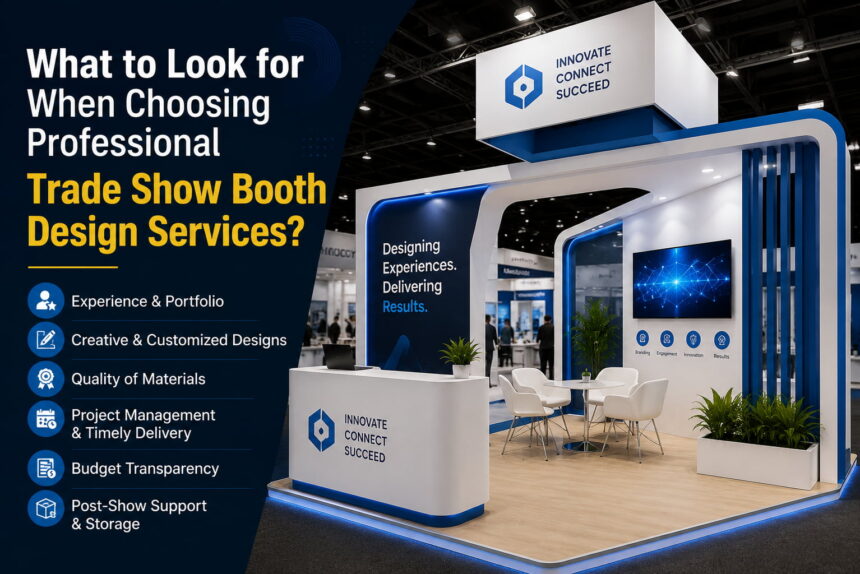
A trade show booth can be one of the most visible representations of your brand. For a few busy days, it becomes your showroom, meeting space, marketing platform, and first point of contact with potential customers. That is why choosing the right trade show booth design services is a decision that deserves more thought than simply comparing portfolios or prices.
A beautiful booth may attract attention, but professional exhibit design goes much deeper. The right partner should understand your brand, your audience, your event goals, and the practical realities of exhibiting.
So, what should you actually look for when selecting a professional trade show booth design company? Here are the factors that matter most.
A Strategy-First Approach
Good booth design should begin with questions, not sketches.
Before suggesting colors, structures, or digital screens, a professional exhibit design team should want to understand:
- Why are you attending the show?
- Who is your target audience?
- What products or services are you promoting?
- Do you need private meeting areas?
- Will you conduct live demonstrations?
- Is lead generation the main objective?
- How should visitors move through the space?
These questions help ensure the booth is designed around business goals rather than visual trends alone.
The best professional trade show booth design services combine creativity with strategy. Every major design choice should have a purpose.
Experience With Different Booth Sizes and Formats
A 10×10 booth requires a very different approach from a 20×20 island exhibit or a large custom pavilion.
When evaluating a booth design provider, look for experience across different exhibit formats, including inline booths, peninsula exhibits, island booths, modular displays, and large custom environments.
This matters because each format presents unique challenges. Smaller spaces require careful use of every square foot, while larger booths need strong traffic flow and visual structure to avoid feeling empty or confusing.
An experienced team should know how to make the space work effectively, regardless of size.
A Portfolio That Shows More Than One Design Style
Reviewing past work is important, but do not focus only on whether the booths look impressive.
Look for variety.
If every project appears nearly identical, it may suggest that the company relies heavily on templates or repeats the same design language for different clients. Your exhibit should reflect your brand, not look like a slightly modified version of someone else’s booth.
A strong portfolio should demonstrate the ability to work with different:
- Industries
- Brand personalities
- Booth sizes
- Marketing objectives
- Materials
- Technologies
- Visitor experiences
The goal is not to find a company with one attractive style. It is to find a team capable of translating different brand identities into physical spaces.
Clear Understanding of Visitor Flow
One of the biggest differences between decoration and professional exhibit design is how the space functions.
Trade show attendees should be able to understand where to enter, what to explore, and where to engage with staff. Poorly positioned counters, walls, displays, or furniture can create barriers and discourage visitors from stepping inside.
Professional trade show exhibit design services should consider:
- Open and accessible entry points
- Sightlines from different aisles
- Product placement
- Demonstration areas
- Meeting zones
- Staff movement
- Congestion points
- Visitor exit paths
A booth should not only look good in a rendering. It should work when dozens of people are moving through it during a busy event.
Design and Fabrication Capabilities
A strong concept is only valuable if it can be built properly.
Ask whether the company handles both design and fabrication or how closely it coordinates with production partners. When designers and fabricators work together, practical issues can often be identified earlier.
This collaboration helps ensure that creative ideas are realistic in terms of:
- Materials
- Structural requirements
- Production timelines
- Transportation
- Installation
- Venue regulations
- Budget
The transition from concept to finished booth should be clear and organized.
Transparent Budget Communication
Trade show exhibiting involves multiple costs, and unclear pricing can lead to unpleasant surprises.
Professional booth design companies should be willing to discuss budget expectations early. They should also help clients understand which design decisions may affect production, shipping, labor, installation, and show services.
For example, a complex overhead structure may increase rigging requirements. Heavy materials may raise shipping and material handling costs. Extensive AV integration may require additional electrical planning.
A reliable partner does not simply create the most expensive concept possible. They help balance visual impact, functionality, and available budget.
Knowledge of Trade Show Rules and Venue Requirements
Every event and venue can have different regulations.
These may cover:
- Maximum booth height
- Hanging signs
- Fire safety
- Electrical access
- Setback rules
- Floor load
- Approved materials
- Labor requirements
A booth that looks excellent on paper can face delays if these practical details are ignored.
Experienced trade show booth professionals understand the importance of designing with event guidelines in mind. This can reduce last-minute modifications and help the installation process run more smoothly.
Support Beyond the Initial Design
Booth design is only one stage of the exhibiting process.
Depending on your needs, you may also require assistance with:
- Graphic production
- Exhibit fabrication
- Shipping coordination
- Installation and dismantling
- AV integration
- On-site support
- Storage and warehousing
- Booth refurbishment
- Reconfiguration for future shows
Working with a partner that offers broader support can simplify coordination, especially for brands participating in multiple events.
This is where experienced providers like Purple Exhibits can add value by helping businesses connect booth design with the practical requirements of execution. A more integrated approach can reduce communication gaps and make the overall exhibiting process easier to manage.
Ability to Design for Future Use
If you attend several trade shows each year, think beyond the next event.
A professional design team should be able to discuss whether parts of the booth can be reused, updated, or reconfigured. This might involve modular structures, replaceable graphics, reusable counters, flexible meeting areas, or components that work across multiple booth sizes.
For example, elements from a 20×20 exhibit may potentially be adapted for a smaller footprint at another event if flexibility is considered from the beginning.
Designing with future use in mind can improve consistency and help brands get more value from their exhibit assets.
Communication and Project Management
Even the best design can become stressful if communication is poor.
Trade show projects often involve tight deadlines, multiple approvals, vendors, shipping schedules, and venue requirements. You need a partner who communicates clearly and keeps the project moving.
Before making a decision, consider:
- Are responses timely?
- Is the process clearly explained?
- Are responsibilities defined?
- Are timelines realistic?
- Is there a clear approval process?
- Do they identify potential problems early?
Strong project management is often just as important as creative ability.
Choosing professional trade show booth design services should not be based on appearance or price alone. The right partner should understand strategy, visitor behavior, fabrication, event logistics, budgets, and the long-term needs of your exhibit program.
Look for a team that asks thoughtful questions, communicates clearly, shows genuine design flexibility, and understands what happens beyond the 3D rendering.
A successful booth is not simply a structure placed on a trade show floor. It is a working brand environment designed to attract attention, support conversations, showcase products, and help your team make the most of every event opportunity.
Taking the time to choose the right booth design partner can make the entire exhibiting experience more organized, more effective, and ultimately more valuable for your business.