

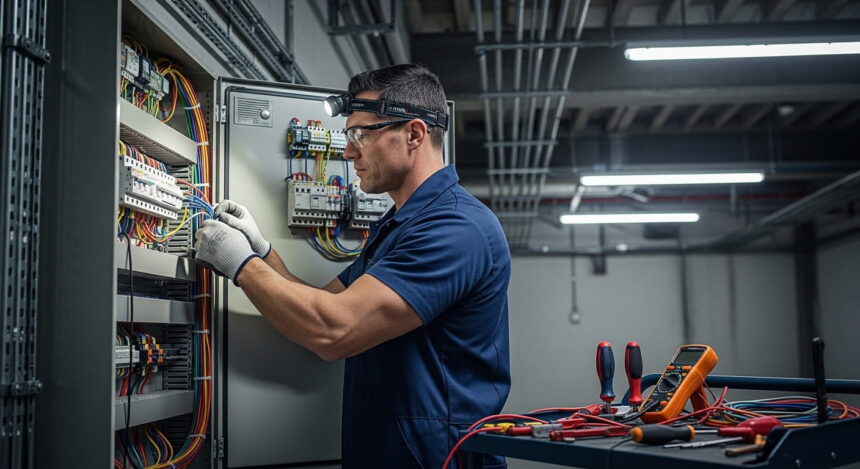
A commercial electrician is a tradesperson who specialises in installing, maintaining, and repairing electrical systems for businesses, factories, schools, hospitals and other non-residential properties. Unlike a residential electrician, a commercial electrician works with larger loads, more complex wiring, and stricter safety standards. In Australia, the role also involves complying with the Australian Standards (AS/NZS 3000) and the Electrical Safety Act of each state or territory. By mastering the nuances of commercial power distribution, these professionals keep lights on, machines running, and data centres secure.
Key Responsibilities
The day-to-day duties of a commercial electrician cover a wide range of tasks that keep a building’s electrical infrastructure safe and functional.
- Designing and installing high-capacity circuits, switchboards and distribution panels.
- Testing and commissioning new equipment to meet regulatory requirements.
- Performing routine inspections and preventive maintenance.
- Diagnosing faults and repairing faulty wiring, breakers, or lighting systems.
- Ensuring compliance with fire safety and emergency lighting codes.
Why Emergency Repairs Need a Specialist
When a commercial building experiences an electrical failure, the impact can be far greater than a simple household outage. A sudden loss of power can halt production lines, compromise data integrity, and jeopardise the safety of staff and customers. Because commercial systems are larger and more interconnected, troubleshooting often requires specialised diagnostic tools and a deep understanding of industrial equipment. Hiring emergency electrical repair services from a qualified commercial electrician ensures that the issue is resolved quickly, safely, and in line with legal requirements.
Common Types of Emergency Situations
- Power surges that damage sensitive electronic equipment.
- Faulty switchgear causing intermittent outages.
- Electrical fires triggered by overloaded circuits.
- Failure of emergency lighting or exit signs.
- Breakdowns in backup generators or UPS systems.
Impact on Business Operations
An unplanned electrical shutdown can lead to lost revenue, missed deadlines, and damaged reputation. For example, a manufacturing plant that stops production for an hour may lose thousands of dollars in output. A retail store without lighting may see a drop in foot traffic and sales. By engaging a commercial electrician who can respond promptly, businesses minimise downtime and protect their bottom line.
How Commercial Electricians Respond Quickly
Speed is essential during an electrical emergency, but it must never compromise safety. Commercial electricians use a combination of preparation, technology, and teamwork to deliver fast, reliable service.
Preparation and Planning
Before an emergency occurs, many commercial electricians develop a response plan that includes the following steps:
- Maintaining an up-to-date inventory of spare parts and tools.
- Establishing clear communication channels with clients and suppliers.
- Conducting regular risk assessments to identify high-risk areas.
- Scheduling periodic drills to test response times.
Advanced Tools and Technology
Modern commercial electricians rely on diagnostic equipment such as thermal imaging cameras, clamp meters, and circuit tracers. These tools help locate faults without dismantling entire panels, saving precious time. In addition, many electricians use cloud-based service management platforms that log work orders, track response times, and provide real-time updates to clients.
Team Coordination and Communication
Emergency repairs often involve more than one electrician. A lead technician coordinates the crew, assigns specific tasks, and ensures that safety protocols are followed. Communication is maintained through mobile radios, messaging apps, or dedicated dispatch software. This coordinated approach reduces the chance of errors and speeds up the repair process.
Local Considerations for Australian Businesses
Australia’s diverse climate, geography, and regulatory environment create unique challenges for commercial electricians. Understanding these local factors helps businesses choose the right service provider.
State and Territory Regulations
Each Australian state has its own licensing requirements. For instance, in Victoria a commercial electrician must hold a Class 2 licence, while in Western Australia a similar licence is issued by the Electrical Licensing Board. Moreover, some states impose additional requirements for high-risk work, such as hot-work permits for welding near electrical equipment.
Preferred Suppliers and Providers
Australian commercial electricians often source components from local distributors like Bunnings, Redbank, and L&H. These suppliers stock Australian-approved circuit breakers, conduit, and lighting fixtures that meet the relevant standards. Working with local suppliers reduces lead times and ensures compliance with regional regulations.
Competitors and Market Landscape
The commercial electrical market in Australia is competitive, with many small firms and larger national chains offering similar services. Key differentiators include response time, specialised certifications (e.g., High-Risk Electrical Work), and the ability to handle multi-site contracts. When evaluating a commercial electrician, businesses should compare service level agreements (SLAs) and read customer reviews on platforms such as Google and local trade directories.
Best Practices for Maintaining Electrical Safety
Preventive maintenance is the most effective way to avoid emergency repairs. Commercial electricians recommend a proactive approach that includes regular inspections, staff training, and thorough documentation.
Regular Inspections and Maintenance
A typical maintenance schedule for a commercial building includes:
- Quarterly visual inspections of switchboards and wiring.
- Annual testing of emergency lighting and exit signs.
- Bi-annual thermal imaging scans to detect hot spots.
- Periodic load testing of generators and UPS units.
Training and Certification
All electricians working on commercial sites must hold a current licence and, where required, a high-risk work licence. Ongoing training in the latest safety protocols, such as the Australian Standard AS/NZS 4836 for electrical safety in the workplace, ensures that crews remain competent and compliant.
Documentation and Record Keeping
Accurate records are essential for both safety and regulatory compliance. Commercial electricians keep detailed logs of inspections, repairs, and upgrades. These records help identify patterns, plan future maintenance, and provide evidence during audits or insurance claims.
Questions and Answers: Common Questions About commercial electrician in Australia
Q: What licences does a commercial electrician need in New South Wales?
A: In NSW, a commercial electrician must hold a Class 2 electrical licence issued by NSW Fair Trading. If the work involves high-risk tasks such as hot-work or work on live equipment, an additional high-risk work licence is required.
Q: How quickly can a commercial electrician respond to an emergency after hours?
A: Many commercial electricians offer 24/7 emergency services. Typical response times range from 30 minutes to two hours, depending on the location of the client and the availability of spare parts.
Q: Are there any government rebates for upgrading commercial lighting to LED?
A: Yes, several Australian states provide incentives for energy-efficient upgrades. For example, the Victorian Energy Upgrades program offers rebates for installing LED lighting in commercial premises.
Q: What safety checks are required after a major power surge?
A: After a surge, a commercial electrician will inspect all affected circuits, test protective devices such as surge protectors and circuit breakers, and verify that critical equipment like fire alarms and emergency lighting are functioning correctly.
Q: How do I verify that a commercial electrician is insured and compliant?
A: Ask to see a copy of the electrician’s licence, public liability insurance certificate, and any relevant certifications. You can also check the licence status on the state’s licensing board website.
Conclusion: Your Path to a Successful commercial electrician in Australia
Choosing the right commercial electrician is a critical decision that affects safety, productivity, and compliance. By understanding the role, recognising local regulations, and prioritising fast, qualified emergency response, Australian businesses can protect their assets and keep operations running smoothly. Regular maintenance, proper documentation, and ongoing training further reduce the risk of costly outages. For more detailed guidance and to find a trusted service provider, visit absoluteairflow.com.au, where you’ll discover resources tailored to Australian commercial electrical needs. Take the next step today schedule an inspection, review your emergency plan, and ensure your electrical systems are in the hands of a qualified commercial electrician.