

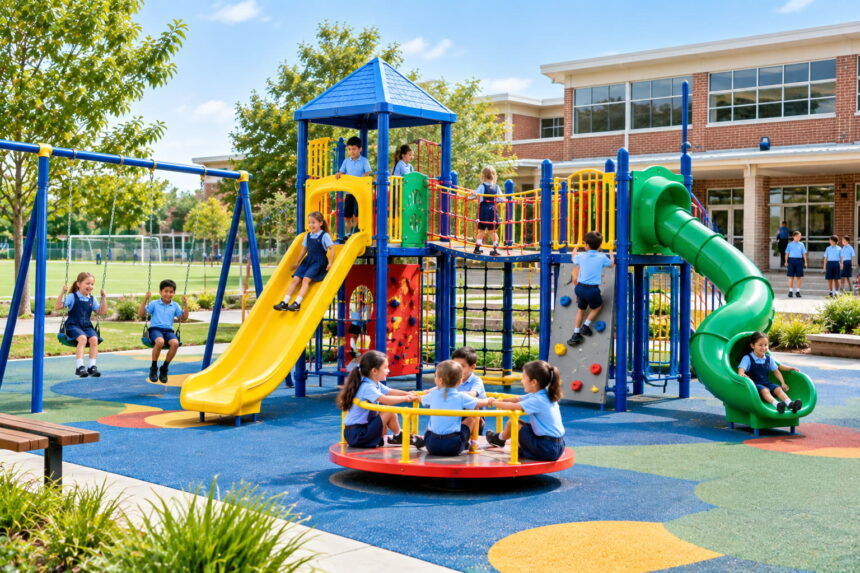
Have you ever watched children completely lost in play, climbing, swinging, and laughing without a care in the world? What if that joyful energy could be harnessed every single day at school? And how much could the right playground equipment transform not just break times, but your students’ overall development?
Active play isn’t just about burning off energy before the next lesson. It’s absolutely vital for children’s physical health, social development, and mental wellbeing. In Australian schools, where we’re fortunate enough to enjoy plenty of sunshine and outdoor space, quality playground equipment can make an enormous difference to how students engage with movement throughout their day.
In this article, we’ll explore why active play matters so much for Australian students and examine the wide-ranging benefits of investing in quality playground equipment. You’ll discover which types of equipment work best for schools, how to choose age-appropriate designs, and what safety standards you need to know about. We’ll also look at costs, funding options, and practical ways to encourage more movement during breaks. Whether you’re a principal, teacher, or parent committee member, you’ll walk away with actionable insights for creating playgrounds that truly inspire healthy, happy students.
The Benefits of Quality Playground Equipment for Students
Physical Health and Development
Let’s start with the obvious benefit – physical fitness. Quality playground equipment for schools gets kids moving in ways that build strength, coordination, and cardiovascular health. Climbing structures develop upper body strength, while swings improve balance and spatial awareness. These aren’t just fun activities; they’re building blocks for lifelong physical health.
Australian children spend significant hours at school each week. Making the most of break times with engaging equipment means students get regular physical activity without it feeling like exercise. Its movement disguised as fun, which is exactly how it should be.
Social Skills and Teamwork
Playgrounds are where friendships are forged. When children navigate climbing frames together or take turns on swings, they’re learning essential social skills. They negotiate, cooperate, and resolve conflicts – all while having a brilliant time.
Group play equipment naturally encourages teamwork. Kids learn to wait their turn, help younger students, and celebrate each other’s achievements. These soft skills are just as important as anything taught in the classroom.
Mental Wellbeing and Stress Relief
School can be stressful for children, particularly with academic pressures and social challenges. Active play provides a natural outlet for stress and anxiety. Physical movement releases endorphins, those feel-good chemicals that lift mood and reduce tension.
A well-designed playground offers children a space to decompress. After tackling a challenging maths lesson, twenty minutes of active play can reset their minds and improve their emotional state.
Supporting Academic Performance Through Movement
Here’s something that might surprise you – active play actually improves academic performance. Research consistently shows that physical activity boosts concentration, memory, and cognitive function. Students who move more during breaks return to class more focused and ready to learn.
Movement breaks aren’t interruptions to learning; they’re investments in it. Schools that prioritise active play often see improvements in classroom behaviour and academic outcomes.
What Playground Equipment Is Best for Schools?
Climbing Structures and Adventure Play
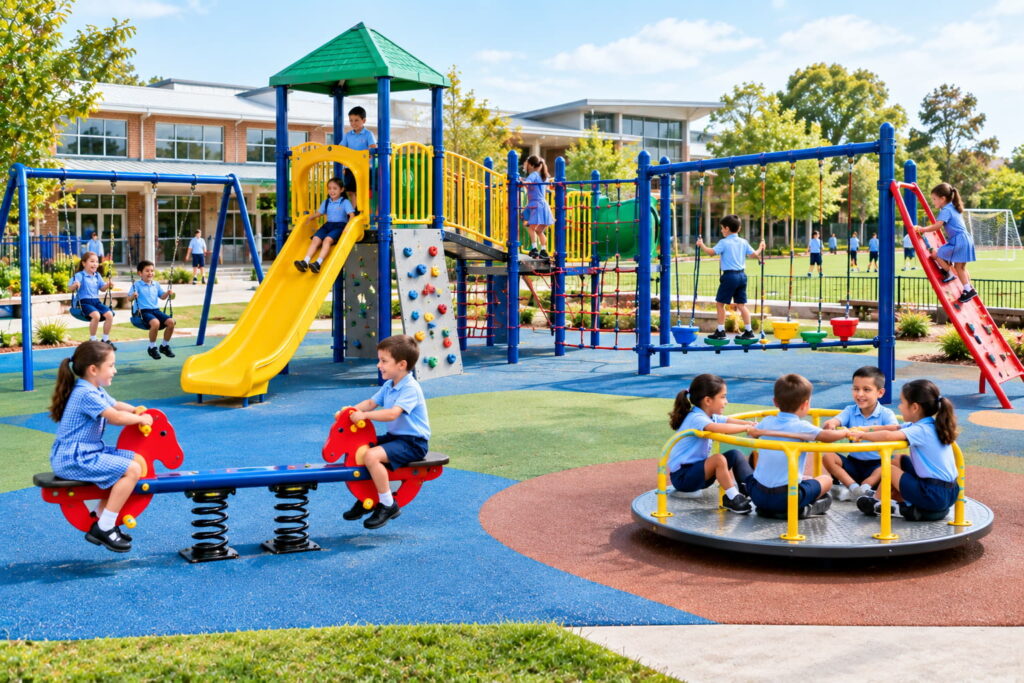
Climbing equipment remains one of the most popular choices for schools, and for good reason. These structures challenge students physically while sparking imaginative play. From simple climbing walls to elaborate adventure playgrounds, the options are extensive.
Modern climbing structures come in various difficulty levels, allowing children of different abilities to find appropriate challenges. They encourage risk assessment skills and build confidence as children master new heights.
Swings and Motion-Based Equipment
There’s something timeless about swings. They’re simple, endlessly entertaining, and provide excellent vestibular stimulation – the sensory input that helps children develop balance and spatial orientation.
Beyond traditional swings, consider inclusive options like nest swings that accommodate multiple children or those with mobility challenges. Spinning equipment and see-saws also fall into this category, offering varied motion experiences.
Inclusive Playground Equipment for All Abilities
Every student deserves to play. Inclusive playground design ensures children of all abilities can participate fully. This might include:
- Ground-level activities for wheelchair users
- Sensory panels for children with autism
- Wide ramps and accessible pathways
- Equipment with multiple entry points
Inclusive design benefits everyone, not just children with disabilities. It teaches empathy and creates a more welcoming school environment.
Natural Play Elements and Outdoor Learning Spaces
Nature-based play is gaining popularity across Australian schools. Natural elements like logs, boulders, sand pits, and water features provide open-ended play opportunities that stimulate creativity.
These spaces often double as outdoor learning areas where teachers can conduct lessons. They connect children with the natural environment and encourage imaginative, unstructured play.
How Do You Choose the Right Playground Equipment for a Primary School?
Age-Appropriate Design Considerations
Not all playground equipment suits every age group. Equipment designed for older students may pose safety risks for younger children, while equipment for littlies might bore senior students.
Consider creating distinct zones for different age groups, each with appropriately scaled and challenging equipment. This approach ensures everyone has engaging options while maintaining safety.
Assessing Available Space and Layout
Before selecting equipment, carefully evaluate your available space. Consider traffic flow, supervision sightlines, and how different areas will be used throughout the day.
A professional playground designer can help maximise your space, ensuring equipment is positioned safely with adequate fall zones and clear pathways between structures.
Balancing Budget with Quality and Durability
It’s tempting to stretch budgets by choosing cheaper options, but quality playground equipment is a long-term investment. Durable materials withstand Australian conditions – harsh sun, heavy rain, and constant use by energetic children.
Quality equipment typically comes with better warranties and requires less maintenance, potentially saving money over time.
What Are the Safety Standards for School Playground Equipment in Australia?
Understanding AS 4685 Compliance
Australian playground equipment must comply with AS 4685, the national safety standard. This standard covers design, installation, and maintenance requirements to minimise injury risks.
When purchasing equipment, always confirm AS 4685 compliances. Reputable suppliers provide documentation proving their products meet these requirements.
Surfacing Requirements and Fall Zones
Appropriate surfacing beneath equipment is critical. Impact-absorbing surfaces like rubber soft fall, bark mulch, or sand reduce injury severity when falls occur. The required fall zone extends beyond the equipment itself, and surfacing must cover this entire area.
Different equipment heights require different surfacing depths. Your supplier should provide specific guidance for each piece of equipment.
Ongoing Maintenance and Inspections
Installation isn’t the end of your responsibilities. Regular inspections identify wear, damage, or emerging hazards before they cause injuries. Establish a maintenance schedule that includes daily visual checks and periodic professional inspections.
Keep detailed records of all inspections and maintenance. This documentation demonstrates due diligence and helps track equipment condition over time.
How Much Does School Playground Equipment Cost?
Factors That Influence Pricing
Playground costs vary dramatically based on equipment type, materials, size, and complexity. A simple climbing structure might cost a few thousand dollars, while comprehensive playground developments can exceed $100,000.
Installation, site preparation, and surfacing add to overall costs. Don’t forget ongoing expenses like maintenance, inspections, and eventual replacements.
Funding Options and Grants for Australian Schools
Fortunately, Australian schools have multiple funding avenues. Government grants, P&C fundraising, community partnerships, and corporate sponsorships can all contribute to playground projects.
Research current grant programs through your state education department. Many local councils also offer community grants that schools can access for playground improvements.
How Can Schools Encourage More Active Play During Breaks?
Designing Playgrounds That Invite Movement
Equipment selection is just one piece of the puzzle. Playground design should naturally encourage movement by creating interesting pathways, varied activity zones, and spaces that invite exploration.
Consider how children will flow through the space. Multiple entry points to equipment reduce queuing and keep children moving rather than waiting.
Incorporating Loose Parts and Interactive Features
Loose parts – moveable objects like balls, hoops, and building materials – dramatically increase play opportunities. They encourage creativity and ensure playgrounds remain engaging over time.
Interactive features like musical instruments, water play, and sensory walls add dimensions beyond traditional equipment, appealing to children with different interests and play styles.
Creating Playgrounds That Inspire Active, Healthy Students
Throughout this article, we’ve explored how quality playground equipment for schools transforms school environments. From physical health benefits to improved academic performance, the case for investing in active play spaces is compelling. We’ve examined equipment options, safety standards, and practical considerations for choosing the right solutions for your school.
The key takeaway? Playgrounds aren’t luxuries – they’re essential learning environments. Every climbing frame, swing, and natural play element contributes to developing healthier, happier, more capable students. The investment you make today will benefit children for years to come.
If you’re ready to transform your school’s playground, start by assessing your current space and engaging students, teachers, and parents in the planning process. Reach out to reputable Australian playground suppliers who understand local conditions and compliance requirements. Your students deserve play spaces that inspire movement, creativity, and joy – and with thoughtful planning, that’s exactly what you can create.