

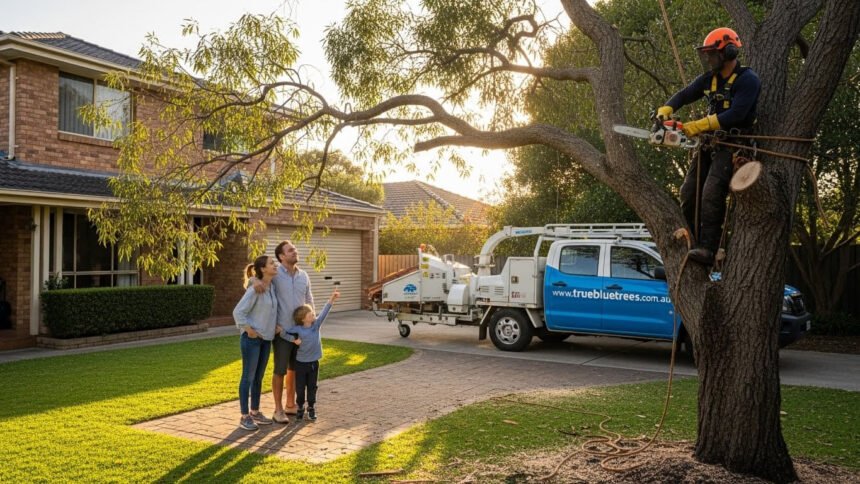
Tree removal is the complete felling and extraction of a tree, including the trunk, branches and (optionally) the stump. On the Mornington Peninsula, where coastal tea-trees, native eucalypts and established exotics define the landscape, tree removal is regulated by council and usually requires a permit before any tree is cut down.
Key takeaways
- Tree removal on the Mornington Peninsula requires a council permit under the Vegetation Protection Overlay.
- Native trees, canopy trees, and significant trees all require written permits before removal.
- Engage an insured arborist with high-level public liability insurance for tree removal.
- Most insurers require professional arborists for tree removal near dwellings.
- Avoid DIY removal due to chainsaw, rope, and rigging hazards.
- Council approval is needed before any significant canopy work.
When Should a Tree Be Removed?
A tree should be removed when it is dead, dying or structurally unsound and cannot be made safe by pruning; when it is causing structural damage to foundations, pipes or paths that cannot be resolved another way; when it is an unsuitable species for the location (a large eucalypt under powerlines or too close to a house); when it is a declared weed or environmental weed; or when it is blocking an approved building or development. A tree should not be removed for amenity alone (leaf drop, shading, view obstruction) if it is healthy and protected – in those cases council is unlikely to grant a permit. A consulting arborist (AQF Level 5) can provide an independent tree removal hazard assessment to support a permit application.
Do I need a permit to remove a tree on the Mornington Peninsula?
Yes, you typically need a permit to remove a tree on the Mornington Peninsula. Mornington Peninsula Shire applies Vegetation Protection Overlays across most residential and rural land. Native trees, canopy trees and any trunk above the specified diameter require a written permit before removal, lopping or significant canopy work.
How Much Does Tree Removal Cost on the Mornington Peninsula?
Indicative 2026 Mornington Peninsula pricing: small tree removal (under 5 m) $350-$800; medium tree removal (5-10 m) $700-$1,800; large tree removal (10-15 m) $1,500-$3,500; very large or high-risk tree removal (15 m+ with crane) $3,000-$8,000+. Palm tree removal $300-$900. Stump grinding adds $150-$500 depending on diameter. Pricing depends on tree size, species (eucalypts are heavier and harder than exotics), access (slope, rear yard, narrow gate), proximity to structures and powerlines, and whether a crane or elevated work platform is needed. The quote should include green waste removal and chipping – leaving branches is a sign of a cut-price operator.
Do I Need a Council Permit to Remove a Tree on the Mornington Peninsula?
Almost always yes. The Mornington Peninsula is covered by the Mornington Peninsula Shire Council, which protects vegetation under the Vegetation Protection Overlay (VPO) and Significant Landscape Overlay (SLO) in the planning scheme. A planning permit is required to remove, destroy or lop any native tree, and many exotics, depending on the overlay that applies to your property. Protected species include coastal moonah, manna gum, messmate, yellow box and sheoak. Exemptions are limited and usually require the tree to be dead, dangerous (with an arborist report), or within 3 m of an approved dwelling. Fines for unauthorised removal can exceed $10,000 per tree. Check the overlay on your property’s planning certificate before engaging a tree service.
Can I remove a tree myself on the Mornington Peninsula?
No, you should not remove a tree yourself on the Mornington Peninsula. Beyond permit requirements, removing large trees involves significant chainsaw, rope and rigging hazards. Most insurers require a qualified arborist with $10 million public liability insurance for tree removal near dwellings, fences or powerlines.
What Is the Tree Removal Process?
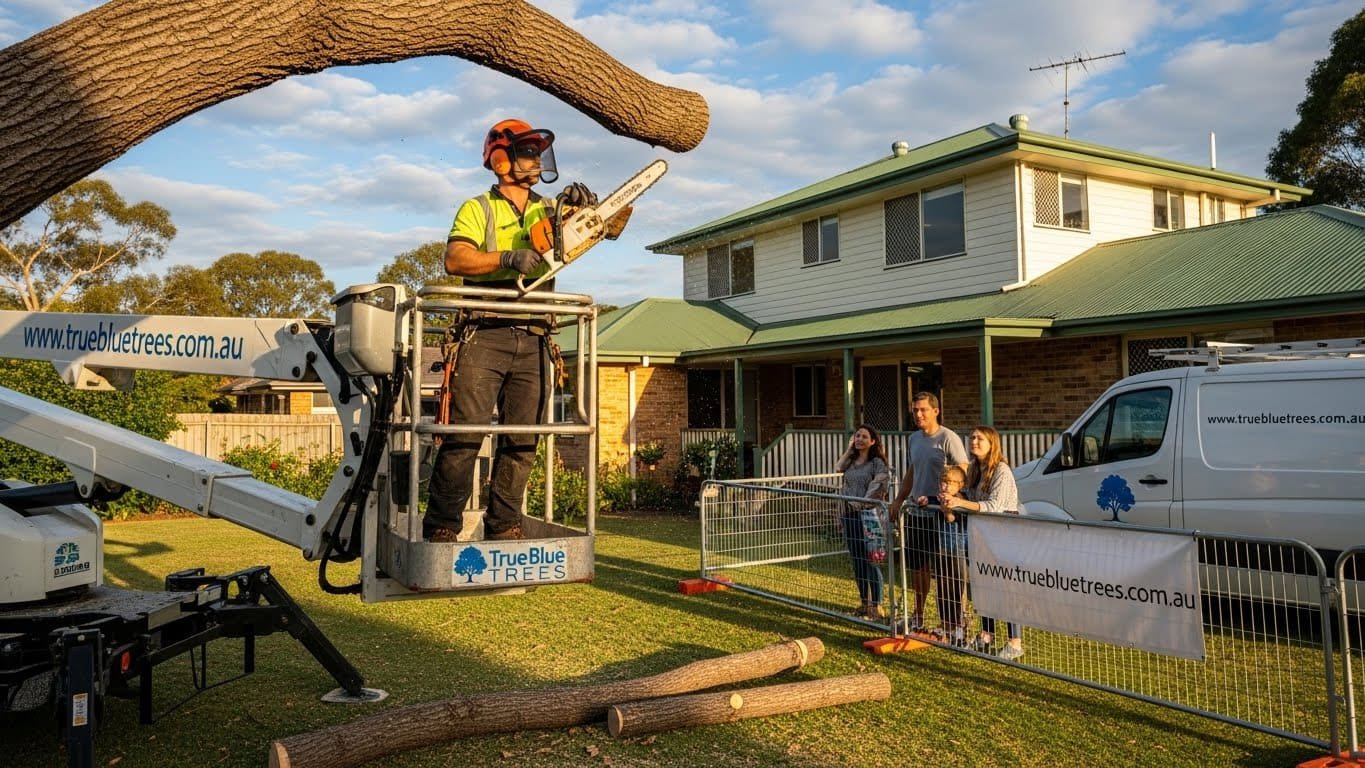
A professional tree removal follows a set sequence. First, the arborist inspects the tree, assesses hazard and access, and confirms council permit status (or applies for one). Second, the crew sets up exclusion zones and traffic management if the tree is near a road or path. Third, the tree is dismantled in sections – either climbed by an arborist with ropes and a harness, or accessed by an elevated work platform or crane for large or hazardous trees. Branches are lowered on ropes, never dropped free, to protect structures and people below. Fourth, the trunk is sectioned and lowered. Fifth, branches are chipped on site and the trunk sections loaded for removal. Sixth, the stump is ground (optional). The whole job for a medium tree typically takes half a day.
How Do You Choose a Tree Removal Service on the Mornington Peninsula?
Look for: minimum Certificate III in Arboriculture; $10-20 million public liability insurance; experience on the Mornington Peninsula (the coastal environment, sandy soils and tea-tree are specialist); a chipper and crane access as needed; written quotes specifying tree-by-tree scope, inclusions (chipping, green waste removal, stump grinding) and exclusions; and a willingness to advise on the permit process. Avoid door-knockers offering ‘cheap tree removal’, operators who propose topping or lopping, and anyone unwilling to provide insurance and qualification evidence. Reputable Peninsula arborists are booked 2-4 weeks ahead in peak season (spring and autumn).
Should You Remove the Stump as Well?
Stump grinding is recommended if you plan to replant, build, pave or turf the area, or if the stump is a trip hazard or regrowth risk (some species regrow from the stump). Stump grinding mechanically chips the stump and main roots to 100-300 mm below ground level, leaving mulch that can be used on garden beds or removed. Cost is $150-$500 depending on stump diameter, species (eucalypts have larger root crowns) and access. Chemical stump treatment is cheaper ($50-$150) but takes months to work and is unsuitable if you want to replant immediately. Leaving the stump to decay naturally takes 5-10 years and is fine for unused corners of a larger property.
Frequently Asked Questions
How much does tree removal cost on the Mornington Peninsula?
Indicative 2026 pricing: small trees under 5 m $350-$800; medium trees 5-10 m $700-$1,800; large trees 10-15 m $1,500-$3,500; very large or high-risk trees 15 m+ $3,000-$8,000+. Stump grinding adds $150-$500.
Do I need a permit to remove a tree on the Mornington Peninsula?
Almost always yes. Mornington Peninsula Shire protects vegetation under VPO and SLO overlays. A planning permit is required to remove native trees and many exotics. Fines for unauthorised removal can exceed $10,000 per tree. Check your property’s overlay before engaging a tree service.
Can I remove a tree myself on the Mornington Peninsula?
Only if it is not protected (no overlay applies) and you have the skill and equipment for safe felling. Most Peninsula trees are protected, and large-tree felling is dangerous. Use a qualified arborist and get a permit first.
What is stump grinding and is it necessary?
Stump grinding mechanically chips the stump and main roots to 100-300 mm below ground for $150-$500. It is recommended if you plan to replant, build, pave or turf the area, or to prevent regrowth. Otherwise the stump can be left to decay naturally over 5-10 years.
How do I choose a tree removal service on the Mornington Peninsula?
Look for Certificate III Arboriculture, $10-20 million public liability insurance, Peninsula experience, written itemised quotes, in-house chipper and crane access, and a willingness to advise on permits. Avoid door-knockers and anyone proposing lopping.
Conclusion
Tree removal on the Mornington Peninsula is a regulated activity requiring council permits, qualified arborists and careful risk management. Engage an insured contractor with Certificate III in Arboriculture, $10 million public liability insurance, and council-approved work methods. Responsible removal protects property, preserves canopy cover where possible, and maintains the Peninsula’s distinctive coastal and rural landscape character for future generations.



 the stump.)