

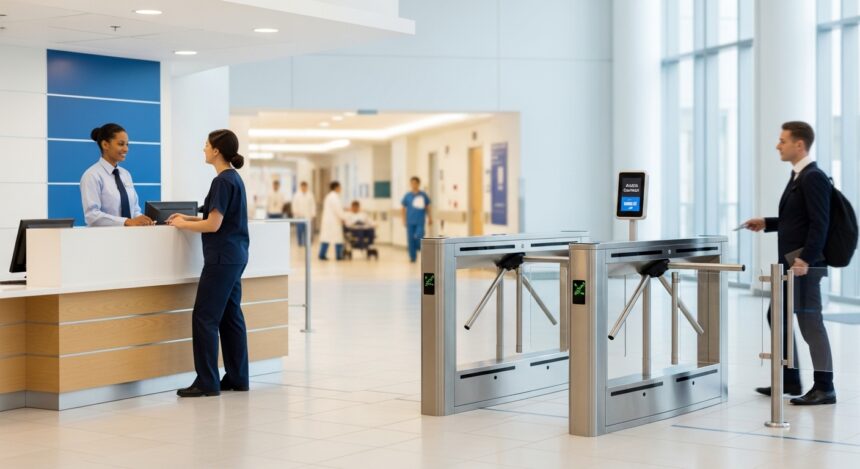
Healthcare environments are fast-paced and constantly changing, where even a few seconds can make a significant difference in patient outcomes. During emergencies, hospitals must enable medical teams to move quickly, protect sensitive areas, and prevent unauthorized individuals from disrupting critical operations. This is where access control systems become an essential part of hospital security and emergency preparedness.
Today’s access control technologies go far beyond traditional locks and keys. Modern solutions provide healthcare facilities with intelligent security tools that manage movement throughout the building, secure restricted areas, and support faster emergency response. When integrated with other security and communication systems, these solutions help hospitals improve patient safety, strengthen overall security, and operate more efficiently.
Why Emergency Response Is Critical in Hospitals
Hospitals regularly face a variety of emergency situations, including medical emergencies, natural disasters, fires, security incidents, and infectious disease outbreaks. During these events, healthcare professionals need immediate access to specific locations while ensuring that unauthorized individuals remain outside critical areas.
Without effective access management, emergency response efforts can be slowed by confusion, overcrowding, or security weaknesses. Hospitals need systems that allow authorized personnel to move quickly throughout the facility while maintaining strict control over restricted zones.
An effective access control system helps achieve this balance by ensuring that the right individuals can access the right areas exactly when they need to.
Understanding Access Control for Hospitals
Access control for hospitals refers to security systems that regulate and monitor entry into various parts of a healthcare facility. These systems commonly rely on credentials such as:
- Key cards
- Mobile credentials
- PIN codes
- Biometric authentication
- Facial recognition technology
Unlike traditional lock-and-key systems, modern access control solutions offer centralized management and real-time monitoring. Hospital administrators can instantly update permissions, monitor movement throughout the facility, and respond quickly to security concerns as they arise.
This level of flexibility becomes especially valuable during emergencies, when fast and informed decision-making is essential.
Enhancing Emergency Department Security
Emergency departments are among the most active and critical areas in any hospital. They handle a constant flow of patients, visitors, and emergency cases, often in highly stressful and emotionally charged situations.
Access control systems help maintain a safe and organized environment by limiting entry to authorized personnel while directing patients and visitors to designated areas. During emergency situations, security teams can quickly secure specific sections of the department when necessary, while ensuring that doctors, nurses, and other healthcare professionals can continue moving freely.
By creating a controlled environment, hospitals can reduce disruptions, improve workflow, and support faster patient treatment when every second matters.
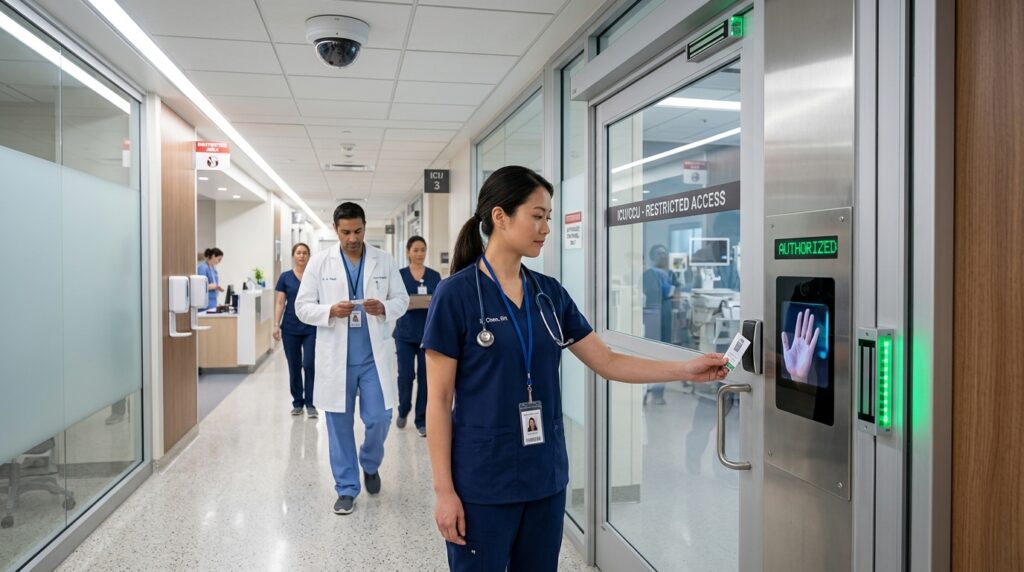
Protecting Critical Care Areas
Hospitals contain several sensitive locations that require a higher level of security and access management. These areas often include:
- Intensive Care Units (ICUs)
- Operating theatres
- Pharmaceutical storage rooms
- Laboratories
- Data centers
- Neonatal care units
Access control systems ensure that only authorized personnel can enter these restricted areas. During emergencies, administrators can instantly adjust permissions to allow additional medical teams, specialists, or emergency responders access when required.
This flexibility helps maintain a secure environment while ensuring that patient care continues without interruption.
Supporting Faster Staff Movement
In emergency situations, delays caused by locked doors or manual security procedures can have a direct impact on response times. Access control systems eliminate many of these obstacles by giving authorized healthcare workers immediate access to the areas they need.
Through technologies such as smart credentials, mobile access, and biometric authentication, doctors, nurses, and emergency responders can move efficiently throughout the hospital without compromising security standards.
Faster access allows healthcare professionals to focus their attention on patient care instead of dealing with unnecessary security barriers. As a result, hospitals can respond more effectively during critical situations and improve overall patient outcomes.
Integrating Access Control with Emergency Systems
One of the most valuable features of modern hospital access control systems is their ability to integrate with other emergency response technologies.
These integrated solutions can connect with:
- Fire alarm systems
- Nurse call systems
- Emergency communication platforms
- Video surveillance systems
- Building management systems
For example, if a fire alarm is triggered, the access control system can automatically unlock designated evacuation routes while restricting entry to hazardous areas. Likewise, during a security incident, specific sections of the hospital can be locked down immediately while still allowing emergency personnel to gain access where needed.
These automated responses improve coordination, enhance safety, and help hospitals manage emergency situations more efficiently.
Improving Infection Control Measures
Hospitals must also be prepared to respond to public health emergencies, including infectious disease outbreaks. Access control systems play an important role in infection prevention by restricting access to isolation units and specialized treatment areas.
Healthcare facilities can establish controlled access zones that limit unnecessary movement while ensuring that authorized medical personnel can safely reach patients. In addition, detailed access records provide valuable information for contact tracing and monitoring movement patterns when required.
By supporting infection control protocols, access control systems help protect patients, healthcare workers, and the wider community.
Enhancing Real-Time Situational Awareness
Modern access control systems provide hospitals with greater visibility into daily operations. Administrators and security teams can monitor who enters specific areas, when access occurs, and how individuals move throughout the facility.
This real-time insight becomes particularly valuable during emergencies, enabling faster decision-making and more efficient resource deployment. Security personnel can quickly identify potential concerns and coordinate with medical teams to respond effectively.
Improved situational awareness helps hospitals maintain control during high-pressure situations while minimizing disruptions to patient care.
Strengthening Visitor Management
Visitors provide important emotional support for patients, but they can also create security challenges, particularly during emergencies. Effective access control systems help hospitals manage visitor movement by ensuring that guests can only enter authorized areas.
Features such as visitor registration systems, temporary access credentials, and controlled entry points allow hospitals to maintain a secure environment while still accommodating family members, caregivers, and other visitors.
During emergency situations, hospitals can quickly restrict access to specific areas without affecting essential medical operations elsewhere in the facility. This helps maintain safety and order while allowing healthcare professionals to focus on patient care.
Supporting Regulatory Compliance
Healthcare organizations must comply with strict regulations related to patient privacy, facility security, and overall safety. Access control systems help hospitals meet these requirements by maintaining accurate records of access activities throughout the facility.
Detailed audit trails provide valuable documentation that demonstrates compliance with internal security policies and healthcare regulations. These records can also assist with investigations and incident reviews if security concerns arise.
By improving accountability and transparency, access control solutions strengthen governance practices and help reduce operational risks.
Leveraging Future Healthcare Technologies
As healthcare organizations continue to embrace digital transformation, access control systems are becoming more intelligent, connected, and capable.
Emerging technologies shaping the future of hospital access management include:
- Artificial intelligence-driven monitoring
- Cloud-based access management platforms
- Mobile credential solutions
- Predictive security analytics
- Touchless biometric authentication
These innovations provide hospitals with more responsive and adaptable security capabilities, improving both emergency preparedness and everyday operations. As technology continues to evolve, advanced access control systems will play an increasingly important role in supporting patient care, safety, and organizational resilience.
Conclusion
Effective emergency response depends on more than highly trained medical professionals and advanced healthcare equipment. Hospitals also require secure and intelligent infrastructure that enables rapid decision-making, protects sensitive areas, and ensures the right people can access the right locations when it matters most.
Modern access control systems provide healthcare facilities with the tools needed to enhance security, improve operational efficiency, and support coordinated emergency response efforts. From protecting critical care units and streamlining staff movement to integrating with emergency technologies and strengthening infection control measures, these systems contribute significantly to safer and more resilient healthcare environments.
As hospitals continue to face evolving security and operational challenges, investing in advanced access control solutions will remain a key strategy for improving patient safety, maintaining compliance, and ensuring effective emergency preparedness for the future.