


15 Essential Things to Consider Before Tree Removal
Why Tree Removal Matters in Australia
Australia’s climate, urban growth, and bushfire risk make tree removal a common but careful decision. A well‑planned tree removal protects neighbours, preserves property value, and keeps the environment safe. Whether you live in a coastal suburb of Queensland, a bushland area of Victoria, or a Perth backyard, the same principles apply: respect local rules, assess safety, and choose the right professional. Understanding these 15 essential things will help you avoid costly mistakes and keep your garden healthy for years to come.
1. Check Local Council Regulations
State and Territory Rules
Each Australian state and territory has its own legislation governing tree removal. In New South Wales, the Biodiversity Conservation Act may protect certain species, while in South Australia the Native Vegetation Act restricts removal on private land. Queensland’s Tree Management Plans often require a “Tree Preservation Order” for mature trees. Knowing which law applies to your property is the first step.
Permits and Approvals
- Apply for a removal permit from your local council before any work begins.
- Provide a site plan showing the tree’s location, size, and surrounding structures.
- Expect a waiting period of 7‑14 days for council review.
- Keep a copy of the approved permit on site during the removal process.
2. Assess Tree Health and Safety
Inspect for Disease or Damage
A tree that is dying, diseased, or severely damaged is a safety hazard. Look for fungal growth, dead branches, cracks in the trunk, or signs of pest infestation such as borers. If you notice any of these, a professional arborist should conduct a detailed assessment.
Professional Tree Inspection
Hiring a certified arborist for a tree inspection report adds credibility to your permit application. The report will include a risk rating, recommended removal method, and any required mitigation measures, such as stump grinding or re‑planting.
3. Identify the Right Tree Removal Method
Manual vs Mechanical
Small trees (under 6 m) can often be removed manually with hand tools, while larger trees require a crane or bucket truck. Mechanical methods are faster but may cause more disturbance to nearby structures and the ground.
Environmental Impact
Choose a method that minimises soil compaction and protects surrounding vegetation. In many Australian suburbs, councils encourage low‑impact techniques to preserve native flora and reduce erosion.
4. Choose a Licensed Tree Removal Provider
Only contractors with a valid licence and public liability insurance should be considered. In Australia, the Australian Arboricultural Association (AAA) provides a directory of accredited professionals. A licensed provider will also be familiar with local council processes.
5. Verify Insurance and Warranty
Tree removal can cause property damage if something goes wrong. Ensure the contractor’s public liability insurance covers at least $20 million. A warranty on the work, typically 12‑24 months, gives you peace of mind.
6. Get Multiple Quotes
Request at least three written quotes that break down labour, equipment, disposal, and any additional services such as stump removal. Comparing quotes helps you spot hidden fees and choose the best value.
7. Understand Disposal Requirements
Australian councils often have strict rules about green waste. Some areas require you to separate timber from foliage, while others accept whole trees for recycling. Ask your provider how they will handle disposal and whether a waste levy applies.
8. Plan for Stump Management
After the tree is cut, the stump remains. Options include grinding, chemical removal, or full excavation. Grinding is the most common in residential settings and leaves a mulch that can be used in garden beds.
9. Consider Re‑planting Obligations
Many councils require you to replace a removed tree with a native species within a set timeframe, often 12‑24 months. Choose a species suited to your climate zone—e.g., a Grevillea in Perth or a Bottle Tree in Adelaide.
10. Check for Utility Conflicts
Before any work starts, contact your utility providers (electricity, gas, water, telecommunications) to locate underground lines. In Australia, the “Dial Before You Dig” service (Australia One) provides a free site map.
11. Evaluate Seasonal Timing
Tree removal is safest during the dry season when ground conditions are firm. In tropical Queensland, aim for the cooler months (April‑September). In southern states, avoid the wet winter months that increase slip risk.
12. Protect Nearby Structures and Landscaping
Cover fences, driveways, and garden beds with tarpaulins or plywood. A reputable contractor will use protective measures to prevent damage from falling branches or equipment.
13. Review the Contractor’s Safety Record
Ask for evidence of safety training, such as a High‑Risk Work Licence, and check their incident history. A clean safety record indicates a professional approach to tree removal.
14. Communicate Clearly with Neighbours
Tree removal can affect adjoining properties. Give neighbours advance notice, especially if the work involves large equipment or noisy machinery. In some suburbs, a written notice is required by council regulations.
15. Keep Detailed Records
Maintain a folder with permits, contracts, insurance certificates, and inspection reports. These documents are useful for future property sales and for any council audits.
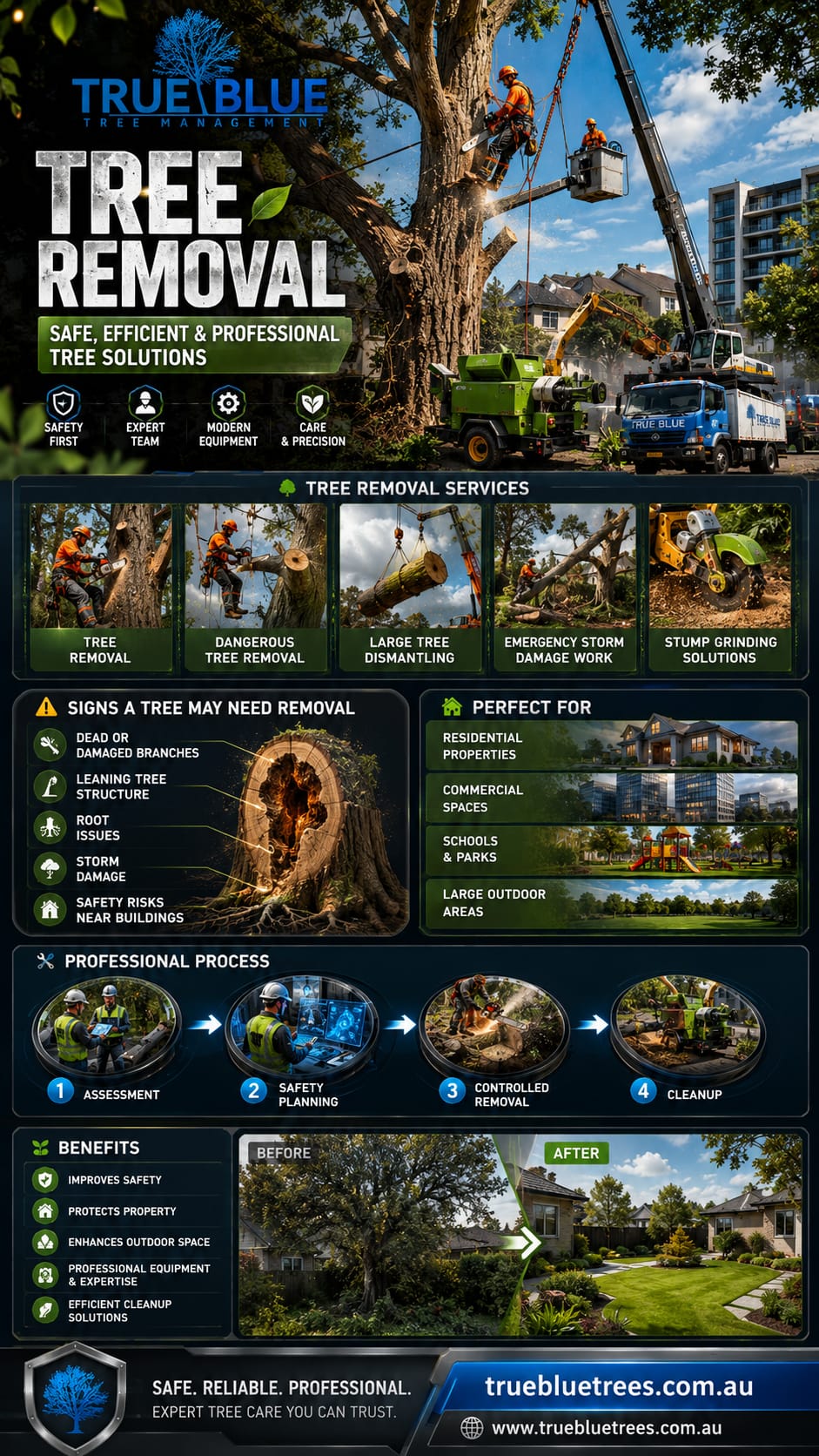
Questions and Answers: Common Questions About tree removal in Australia
Q: Can I remove a tree on my own property without a permit?
In most Australian states, a permit is required if the tree is larger than a certain size or is protected under local heritage rules. Even on private land, removing a mature native tree without approval can result in fines.
Q: How much does professional tree removal cost in Australia?
Costs vary by state, tree size, and access difficulty. A small ornamental tree (under 6 m) may cost $300‑$600, while a large canopy tree (over 12 m) can exceed $2,000. Always ask for a detailed quote that includes disposal and stump grinding.
Q: What are the most common reasons for tree removal in Australian suburbs?
Typical reasons include disease, safety hazards, interference with building extensions, and compliance with council setbacks. Bushfire‑prone areas also remove trees that are too close to homes to reduce fire risk.
Q: Is stump grinding required after tree removal?
Stump grinding is not mandatory in all councils, but many recommend it to prevent tripping hazards and to allow re‑planting. Some councils may charge a separate fee if the stump is left in place.
Q: How can I choose a native tree to replace a removed one?
Select a species that matches your local climate zone and soil type. In coastal NSW, consider a Coastal Banksia; in the arid interior, a Mulga works well. A local council or nursery can provide a list of approved native species.
Conclusion: Your Path to a Successful tree removal in Australia
Tree removal is a serious task that blends safety, legal compliance, and environmental care. By checking council regulations, assessing tree health, hiring a licensed and insured contractor, and planning for disposal, stump management, and re‑planting, you protect your property and the community. Keep records, communicate with neighbours, and respect seasonal timing to ensure a smooth process. With these 15 essential considerations in mind, you are ready to make an informed decision and achieve a safe, compliant, and environmentally responsible tree removal in Australia.